SHOT TO REMEMBER
"How to Shoot a Nightmare"
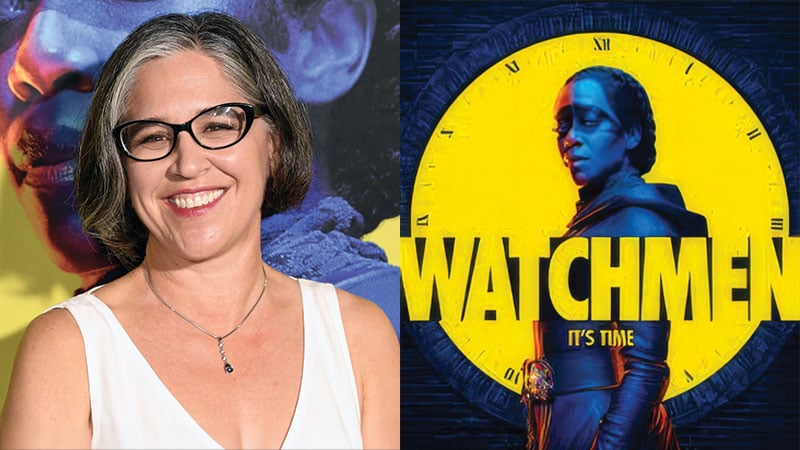
DGA Board member Nicole Kassell’s 2019 DGA Award-winning pilot of the series Watchmen, “It’s Summer and We’re Running Out of Ice,” reenvisions a dark story from America’s past — the 1921 Tulsa Massacre where mobs of white supremacists attacked black residents in one of the worst incidents of racial violence in American history. In this article, Kassell reveals how she created the stunning sequence.
By Rob Feld
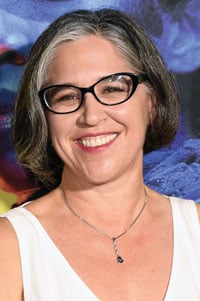 Nicole Kassell’s opening scene to HBO’s Watchmen — inspired by the original graphic novel — places within its dystopia a deeply researched recreation of the historical 1921 white supremacist massacre in Tulsa, Oklahoma’s affluent Black Greenwood neighborhood known as Black Wall Street. The sequence opens with a young Will Reeves (Danny Boyd) — who later in the story becomes the world’s first masked vigilante — in the Dreamland movie theater with his piano-accompanist mother, as the horrific events rage outside. His father (Steven Norfleet), a WWI veteran, bursts in to lead them to a garage, where they intend to escape with another family. To do so, they must make it through a chaotic gauntlet of horrors, establishing indelible memories for young Will that will launch his character journey and the series as a whole.
To establish from its first moments Watchmen’s take on an alternate American history, Kassell and the series’ creators blended aesthetic elements from multiple genres and time periods, including heightened and controlled color palettes, score, and titles. “When I read the script,” says Kassell, “I felt like I was reading a movie version of the song Bohemian Rhapsody; an opera that goes through all these musical genres. It makes no sense and shouldn’t work, but somehow, you’re catapulted through time and it ends with this gut punch. That was my experience of reading the pilot by Damon Lindelof.”
To accomplish the complex street scene, which included a biplane dropping pipe bombs, looting, murder, and various Kafkaesque moments, the production recreated the storefronts of historic North Greenwood Avenue in a town outside Atlanta. Shot over a day and a half, the sequence absorbed more than a quarter of the pilot’s entire pre-production effort. Kassell, working with her AD and stunt teams, mapped the scene and designed hero vignettes for each cluster of street activity, dividing it into four stretches they could shoot as the family runs from the Dreamland to the garage around the corner.
1st AD Keri Bruno and 2nd AD Lisa Zugschwerdt conducted pre-production rehearsals on the lot with key background actors, who then took point on the day of shooting, guiding those in their vignettes who hadn’t attended rehearsal. “This was for performance,” says Kassell, “but also to take care of people emotionally. It was our first day of shooting and what we were asking them to perform was so intense. We started the day gathering the company for a blessing by a pastor, to honor and pay respect to our ancestors.”
Collaborating with DP Andrij Parekh, Kassell says, “We staged it like a play. We would go live with four cameras and follow the primary story of the family’s journey, capturing them and their points of view, with the other cameras free to capture events. Some were dedicated to wide shots, some to tight. It was so important that we handle the scene with the utmost reverence — we happened to be shooting on the anniversary of the actual massacre. I get choked up when I think about all the performers who gave it their all, every take. And every time I watch this scene, I see yet another action that I didn’t even know was happening. I focused on the primary vignettes, and my ADs and stunt coordinators brought all the layers in between to life and to a whole other level.”
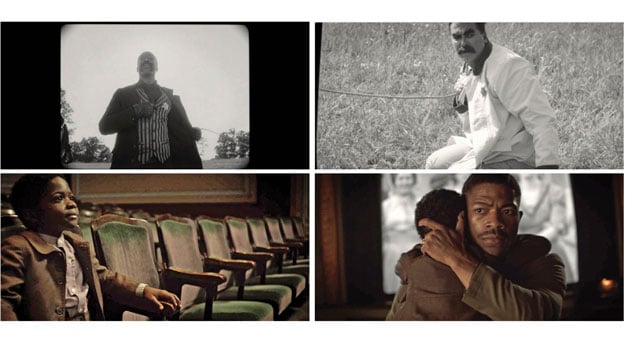
Will watches with adoration for the sheriff character Bass Reeves, performing justice. We shot the silent movie on a hand-cranked 35mm Arriflex 435 camera, with Super Baltar lenses we chose because they were the oldest reliable glass we could find. It was inspired by the films of Oscar Micheaux. We projected it in the theater so Danny could really respond to the movie. The location was a historic theater in Georgia, intended to stand in for the real Dreamland Theater in Greenwood. We wanted it to feel like the movie had been playing for weeks, with that wonderful scratched, dust-in-the-gate feeling. Then we hear a siren and transition with an elegant pan from screen to boy. When we cut to his mother, accompanying the film on piano with music composed by Trent Reznor and Atticus Ross, we’re handheld from then on inside the theater, adding to the verisimilitude and visceral nature of the sequence.
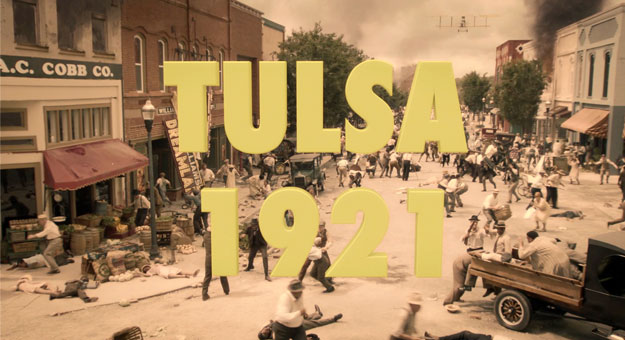
The blazing title contrasts with the period and announces this historic moment. It says right off the bat: this is inspired by an iconic graphic novel and will be more than a period piece, setting the stage for the mixed-genre, dystopian alternate reality to come. We mixed lenses in this scene — from across the street, long lenses shoot through foreground elements, while we used wider lenses to stay tight to the characters, connecting you to them. We built the buildings to the first-floor level, but anything above that was VFX. The plane and smoke were VFX, too. We were precise with the color palette throughout the show, limiting yellows and reds so they really pop when revealed — for example, in the masks the cops wear. We wanted the world to feel gritty, lived-in, real, and period-accurate. Here, it’s sepia and brown earth tones. This was a huge art department event.
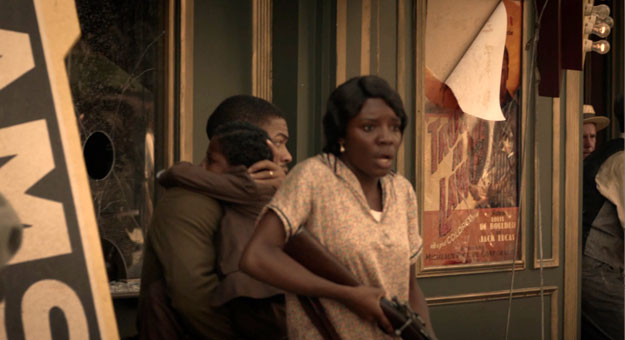
The family emerges to see the horror. Many of the men under attack had served in World War I, so they put on their uniforms to signal, “We’re patriots who fought on your behalf.” It was important to me to show that the mother had been taught self-defense — the first thing she does is cock the rifle. The Dreamland sign has fallen and the poster is torn — we recreated all of that from archival photos. It was important to establish that this event is being imprinted on this little boy’s life. The close-ups are all Steadicam and handheld, pulling and following the family through their journey down the street. Then we would shoot their points of view. I wanted us to be in the shoes of this family and in the boy’s perspective. I generally leaned more toward Steadicam because there was so much chaos in the frame, I didn’t need to add to it with handheld.
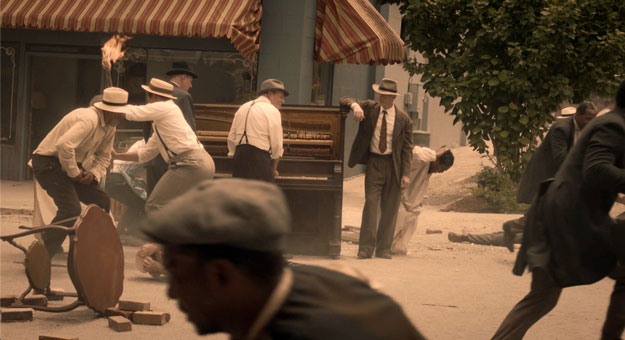
This is an example of the boy’s POV — there’s no locked frame. The camera is pulling them but also panning, or something is moving into the foreground. Part of what was so hideous about the massacre is that, based on actual accounts, amid the looting, there were people playing a piano in the middle of the street. Women and children came to watch as though it were a spectator event. So, to show this contradiction, we created a depth of field of action, so anywhere you’re looking, there are multiple layers of story happening. The actors inhabited their roles so fully. In a moment, this frame turns into an extreme close-up of a KKK man with a rifle, having just shot a woman — Will’s father then stops his wife from shooting him in turn.
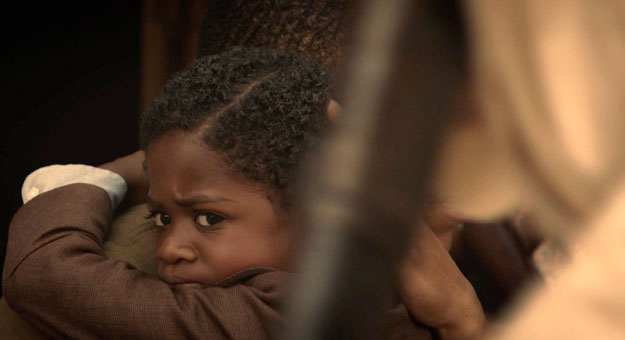
We’re panning with them on a long lens from across the street. The foreground element is the KKK man passing. I tried to give Danny real things to react to, staying mindful of what we exposed him to. I wanted to capture his expression, bearing witness. I made sure he met Steven during rehearsal, and the sweetest thing happened — between takes, Danny only wanted to be carried by Steven. When they’d come together, Danny — without saying a word — would jump and Steven would catch him. But poor Steven — this was May in Georgia, and he was in that wool uniform, recreated by costume designer Sharen Davis. He was drenched from carrying and caring for Danny while navigating this incredible obstacle course and giving this nuanced performance. How much fear? Anger? Determination? It was a fine line: he couldn’t be too vulnerable, but he also had to be terrified.
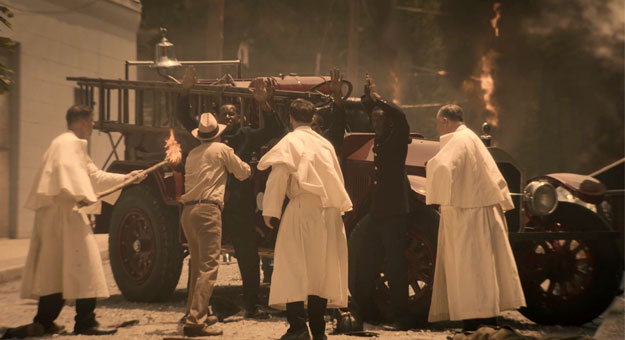
In another of young Will’s POVs, firemen are being held back from doing their work. In some ways, filming this was straightforward — a pull/follow and POVs, only with a zillion stunts happening. I had playback, and after each take, I’d bring all the operators together to study what we captured because we didn’t want to put everyone through it over and over. We did two or three takes for each set piece, at most. Like the title, the dissonant electric-guitar hum of Trent and Atticus’s score was essential to cueing that we’re looking at one genre but are really in another. The contradiction of not using period instruments added to the discomfort and horror of what we’re experiencing and foreshadowed where we’re going.
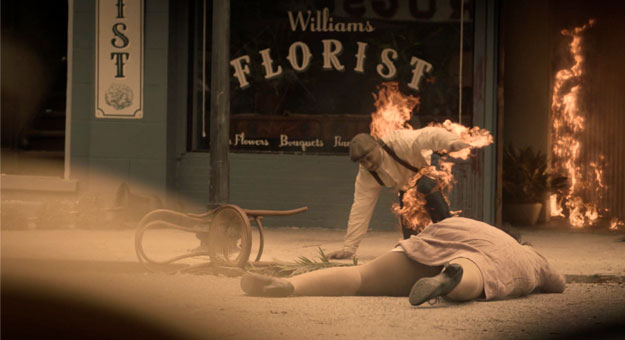
In this POV, the family hides behind a car as a woman is dragged out of the store and shot. A Molotov cocktail is thrown inside, and this man runs out. It’s an overload of horror. This was a frightening stunt to pull off, but it was very rehearsed and well prepared. It was a specialty shot on a long lens, and we paused everything else to focus on this event. We’re shooting through the car, which gave us the nice layering of glass and foreground elements. Essential to editing this sequence was walking the fine line between showing the graphic horror of what really happened and being gratuitous. Hanging on a frame a hair too long could quickly tip it over, becoming disrespectful to the historical event.
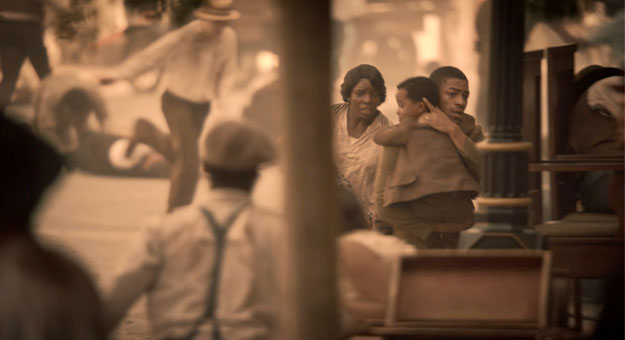
I wanted us to be in the shoes of this family and in the boy’s perspective. We did a pass where we planted cameras around the set and let the actors run the entire length of it while all the set pieces went live. The cameras were focused on them from across the street and from down at the end of it. The sound design was heightened and distorted to add to the emotional impact of this event on young Will’s life, so screams and gunshots would pierce through the muffled sound and that powerful score.
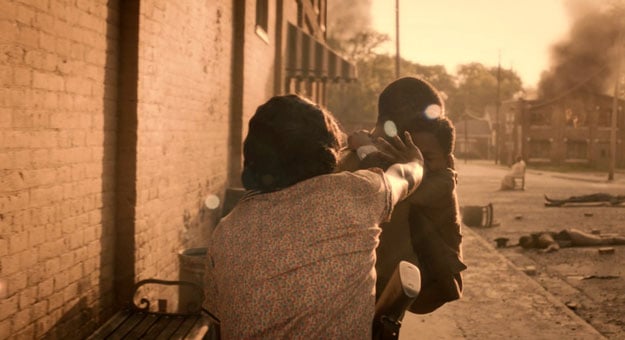
We followed them on Steadicam as they came around the corner from the hell of the main street, hoping to find an escape. It was important for me to include his mom in his journey — I wanted her to reach out to shield her son’s eyes, even if it was futile, to show the instinct, the wish to protect his innocence. We placed the extra in the chair in the background, in the middle of the street, to add to the incongruity of the event — an elderly person seemingly having a rest, but in the utterly wrong place, heightened the tragedy and horror of the moment. This extra — in shock and surrounded by debris — was actually a descendant of a survivor of the 1921 massacre. We planned this shot for this time of day to get the sun’s flare.
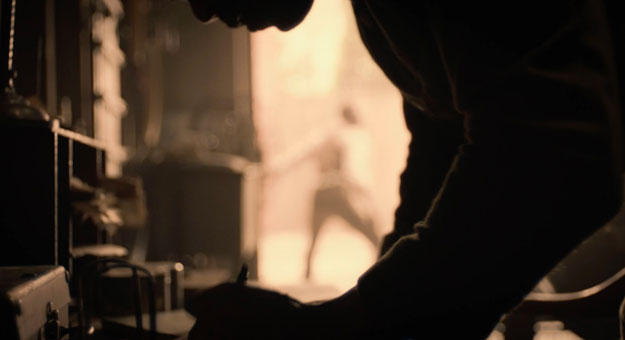
The family gets to a garage for a moment of safety. Some high piano notes mix with the guitar hum to create an emotional shift — it’s a goodbye scene, and they’re a close, loving family. There’s another family ready to escape in their car. Will’s parents think they’re all escaping together, but there’s no room, so his dad empties the trunk and puts Will inside. Here, Will’s father is writing a note that he puts in his son’s pocket, which will stay with him for the next hundred years and become a key prop revealed at the end of the pilot. I went for the silhouette to keep what he’s writing so urgently mysterious. I like layers of things in the background — the light blows out behind him as the other man opens the garage doors, and you hear screams and terror again. There are always layers of action. Nowhere is safe anymore.
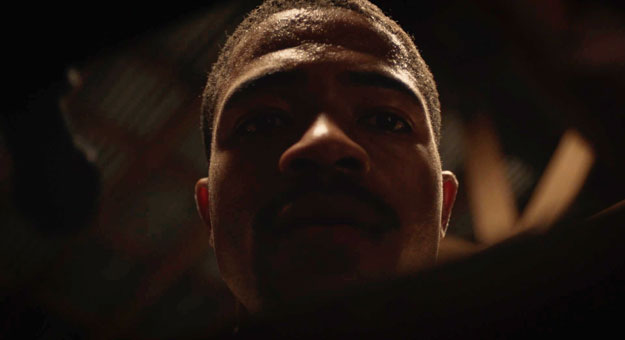
The mother puts on a brave face. The father tells his son not to suck his thumb, hides him in the trunk, and puts the note in his pocket. It’s not over-romanticized. We had the camera in the trunk to capture the father shutting the lid and closing the boy in — his last image of his father before he is ripped away from his family.
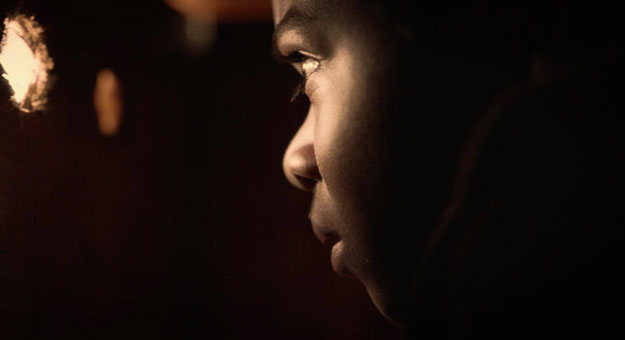
We built a box with a removable side so the camera could be in there with the boy. The grips shook the box to simulate the car driving away. Bullets pierce the box, terrifying him. We used squibs to blow out these little holes and created plugs that we could pull. The boy looks out and sees an airplane flying over the garage and gas station where his parents are. The pilot drops a Molotov cocktail, striking the gas station.
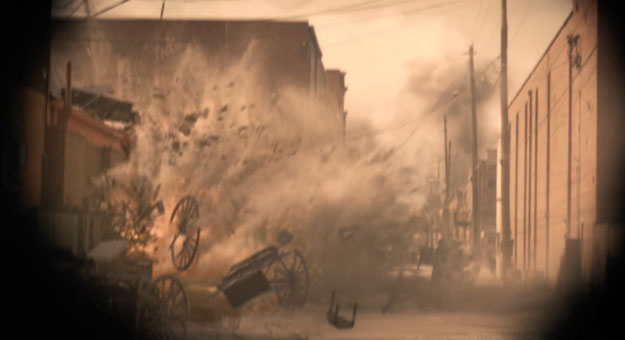
The gas station blows up in Will’s POV, and we cut hard to black as the boy is knocked out by the psychological impact. The location followed a real path from the theater — we went down the block, took two lefts, and this is the back alley from where we started. This shot was a combination of visual and practical effects. We set cameras to capture the stunt, cleared the set, and created a big explosion with a lot of dust — though we didn’t actually blow up a structure. We enhanced the material flying at us with VFX.
Screenpulls: Warner Bros. & HBO.