SHOT TO REMEMBER
Running on Empty
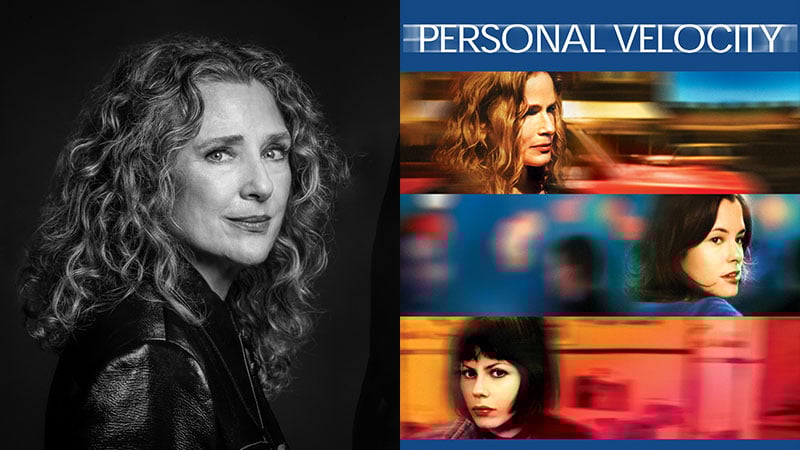
Rebecca Miller’s 2002 feature, Personal Velocity, is a series of vignettes where three women struggle to free themselves from the men who restrict their personal freedom. In this article, Miller — who recently won a DGA Award for her documentary series, Mr. Scorsese — recalls how she crafted the final sequence.
By Rob Feld
 The final character portrait within Rebecca Miller’s indie triptych, Personal Velocity, represents the deeply subjective experience of its protagonist, Paula (Fairuza Balk). After a chance decision leaves Paula unharmed while an out-of-control car kills the young man with whom she was walking, she runs — away from the accident and from her life. She drives in a near fugue-state and picks up an abused teenage hitchhiker — apparently trying to rescue something in her world. Paula drives to her mother’s house from which she had run away, leaves the boy in the car and goes inside. As her mother’s unwelcoming boyfriend drifts in and out of the kitchen, Paula tells her mother about the accident and that she is pregnant. Miller draws her audience in and out of Paula’s memory as Paula recounts the events and puzzles the meaning of it all: her life as a runaway, her boyfriend’s appearance in her life, her pregnancy, the accident, and her chance survival.
It’s significant to note this micro-budget film’s place in history as one of the early American digital features to achieve acceptance and commercial success at a time of profound skepticism and resistance to video — in 2002, it won the Grand Jury Prize at Sundance and John Cassavetes Award at the Independent Spirit Awards.
“It was hard for me to get money for my movies,” Miller recalls, “so I started writing a book of short stories. Gary Winick called me and told me about InDigEnt. He said, ‘We own these digital cameras, and we think we can make 10 films for one million dollars. Would you be willing to make one of your scripts?’ He suggested adapting three of my short stories and gave me immense freedom, which got me excited.”
Miller approached the limitations of the camcorders by embracing their strengths: speed, maneuverability, the intimacy with the actors for which the small size of the cameras allowed. She framed tightly for portraiture rather than wider shots, where the digital image would break down at the edges. Without budget for locations or much art direction, they shot in found spaces where they could step into an existing life — in the cabin used for Paula’s mother’s home, they did nothing but rearrange furniture and decorate the refrigerator. Influenced by films like George Cukor’s A Star is Born, she also compressed some sequences into a series of still frames supported by voiceover. Using all her resources and those of her team, with each small ember Miller sought to express the greater fire.
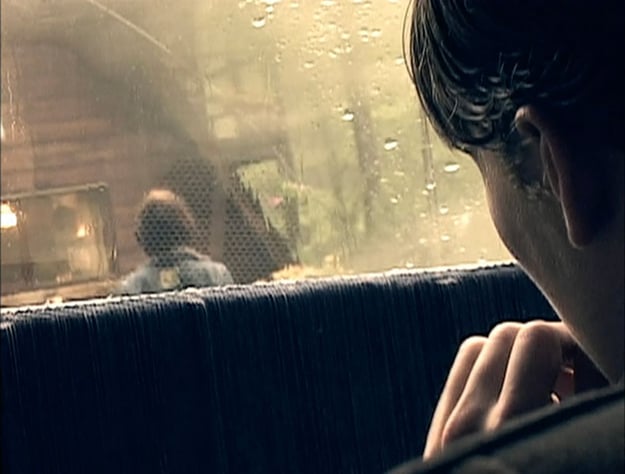
1- This is the third and final portrait in the film. So far, the other two characters in the narrative have listened to a news report about a man who was struck by a car driven by a dead man. Now, we are in the third portrait: Paula. In this sequence, all we know is that Paula has picked up this hitchhiker, and she doesn’t know where she’s going. Until now, we’ve only seen the boy from Paula’s point of view, almost a part of her dream. She’s leaving him in her car with the engine running — is that a bad idea? There’s a destroyed quality to this image — like a memory. The Sony DSR-PD150P PAL cameras we shot on were still primitive and you could feel the digitization. We were on zoom lenses the whole time, but they didn’t work very well in wide shots, so we didn’t go wide very often. It’s one of the reasons the aspect ratio is 1:85 and we made the film a series of up-close portraits — to lean into the strengths of the cameras and use medium and close shots. We wanted to feel close to the characters in their realm, rather than getting epic. Each woman’s story is epic, but here big things are being decided in a small arena.
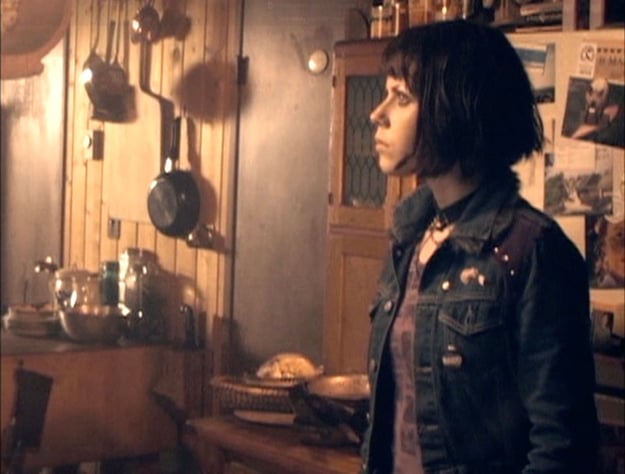
2- Paula enters and you hear from the voiceover that she hasn’t been here in two years, since her mother got a new boyfriend. The decision to have a male narrator helped because there were already three female stories, so his voice was like a red line over a blue field; something that kind of popped. Crickets give a sense of the country, maybe stirring her memory. The idea was to be so far inside Paula’s way of experiencing the world that you almost are her. She’s an orphaned person. Because we had so little budget, our production designer, Judy Becker, could afford to change very little so we had to basically cast our locations, knocking on doors and asking people if we could shoot in their house for free. Then we used the patina of their existing lives, so we got a sense that these places had real pasts — so much of the film is about how the past informs the present. It was like we were shooting inside a life, which is very difficult to build from nothing.
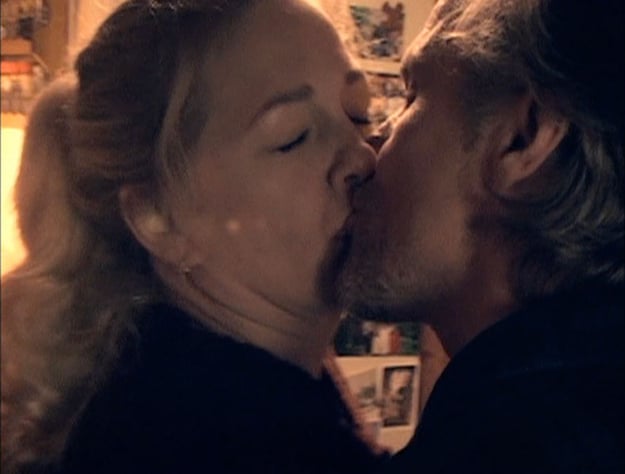
3 - The atmosphere changes when the boyfriend enters. There’s aggression in the way he kisses Paula’s mother — like a dog marking territory. When they part, you see Paula between them, looking away, which tells her attitude. Because cinema is so powerful, you realize how little you need to say. We avoided too digitized a look by using smoke in the interiors. Video of that period overdid highlights. The nice little flare behind her head would have been pretty ugly without the smoke, which made it dreamier. We had “A” and “B” cameras shooting continuously, not doing everything as a different setup. We were using mostly available light and practicals and shooting from different sides of the room. The actors were doing the whole sequence through so there wasn’t a lot of start and stop. We all became one organism: very organic, very alive. Sometimes you want to storyboard and be in control of everything, but this was a different kind of being in control. It pushed us much more into the editing room and into taking a documentary approach.
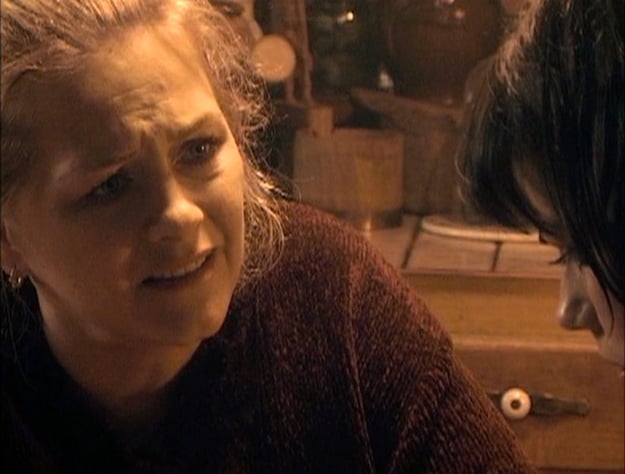
4 - Paula reveals that she was with a guy who got run over and then she ran away. We were blocking actors to frame tension. Here, the mother is trying to reach Paula while her daughter is receding inside herself and falling away, literally out of the frame. I worked hard with the cast to get deep into the dynamic of the family and the threat Paula represents to it. It was all about trying to get the most with the least. So, we tried to play to our strengths. If we had the budget to shoot 35mm film I would have, but I think digital wound up the best thing because we had these two small, light cameras. The actors were used to big film cameras, and their performances became so realistic because the video cameras could get so close, as if nobody was watching them. I probably learned more and got better prepared for my life as a filmmaker by making this film, than any other I could have made.
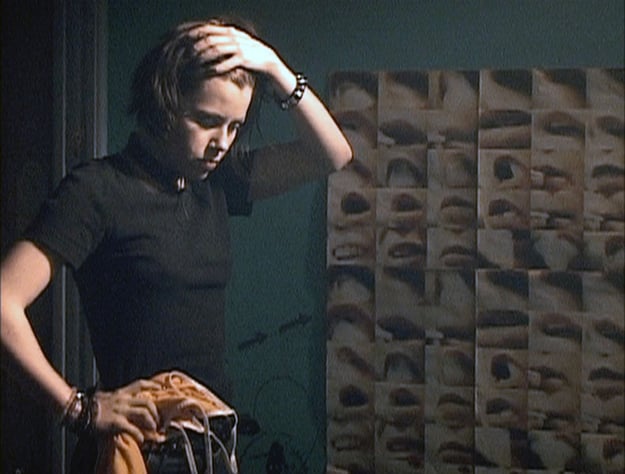
5 - Paula is secretly pregnant so when her boyfriend comes home with wet laundry to hang it over the radiator, it’s the last straw for her — they live in semi-squalor so she panics and they fight. The idea of making sequences out of still frames like this was born of necessity because we could shoot whole sequences quickly, without worrying about sound. But it was also a way to deepen an image — photography allows the viewer more time to have their own thoughts and feelings about an image without having to be on a narrative train. It’s just another way of absorbing things emotionally. Sometimes I thought of this whole film as three feature films with the boring parts cut out. It’s ripping out the expository stuff we think we need and saying, “I’m just going to tell you what I want you to focus on.” The frames are stuffed with information, just in a different way. I think it’s both more alienating and yet brings you closer to the experience because it makes you think about it. It was really important that this feel like how Paula is experiencing life, which may be in a state of shock.
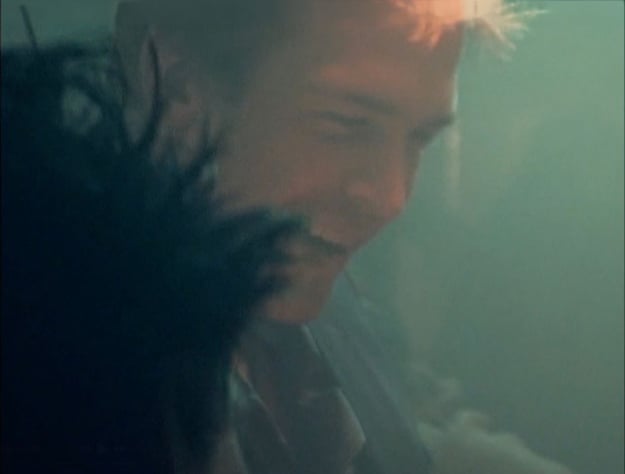
6 - We have three things going on here, in her memory of meeting the guy in this dive bar. The still images, her voiceover of what happened, and then their conversation — which is out of sync to capture a feeling of discombobulation, like a hall of mirrors of memory. We don’t know why yet, but everything is off. There’s a sense of strangeness. We timed the color quite green with the orange of his hair, so there’s kind of a warm/cool vibe going on and we used even more smoke than usual. It’s almost like a womb. She’s getting away from her domestic situation, forgetting about the fact that she’s pregnant, doing shots with this stranger whose presence she takes as a sign. Her fear that there’s no purpose to her life is revealed here. It’s very important that they’re not in each other’s frame. They’re two strangers having a momentary — if fateful — false connection.
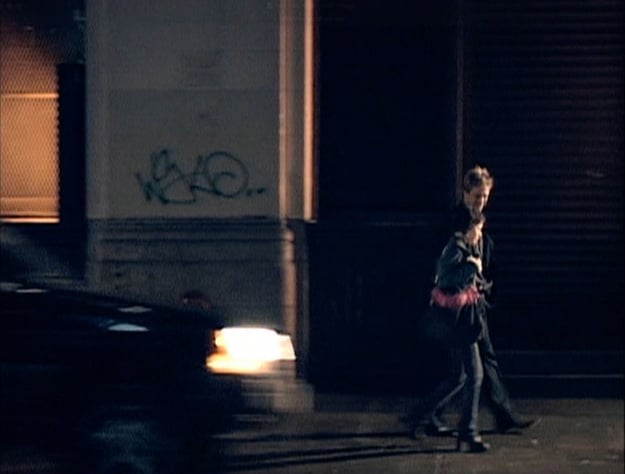
7 - We’re approaching the climax, when the car kills him. First, a car goes by and splashes her, so they switch places. The lenses for these cameras really couldn’t handle wider shots. We learned a lot by watching Thomas Vinterberg’s The Celebration, which we saw as our forerunner — you could see how the digital image fell apart in the wider shots. So, we didn’t want to do too many of these, but we needed to give a sense of Paula and the guy within something big and impending, so we couldn’t stay in close-up the whole time. I think all we had was a light on their faces. We shot 12 hours a day. If you wanted to go half an hour over, you had to ask everybody on set if they could please let you go half-an-hour more.
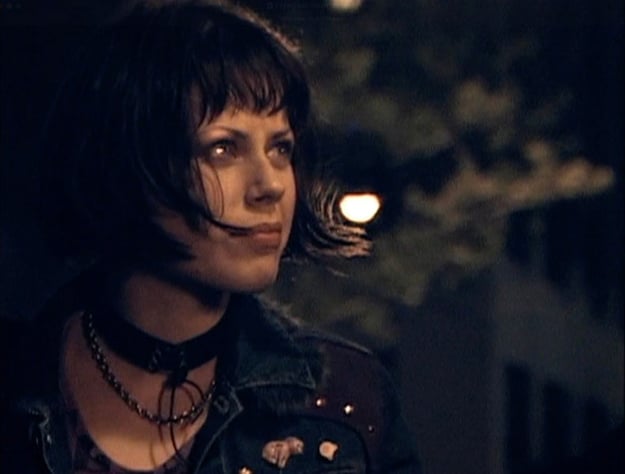
8 - This is right after the guy does this charming thing and switches places with her, away from the curb, after she got splashed. She’s feeling like there might be a reason why she’s there with him. We’re cutting between her and the scene with her mother as she tells this story, in this intense state of mind. It was important to me that we put this furry collar on Paula’s jacket because it softened her. She’s harsh, slightly punk, but she’s also vulnerable and lost. Silent film star Louise Brooks was the inspiration for her, with the harsh hairdo that frames her face. The idea was to create a sense that she’s broken off from her hippie-ish home environment. We used a tremendous amount of foreground with Paula to get lots of texture into the frame — a bit of fur, drops on a window, flowers. Filling the frame with atmosphere lets you create a robust narrative with very little.
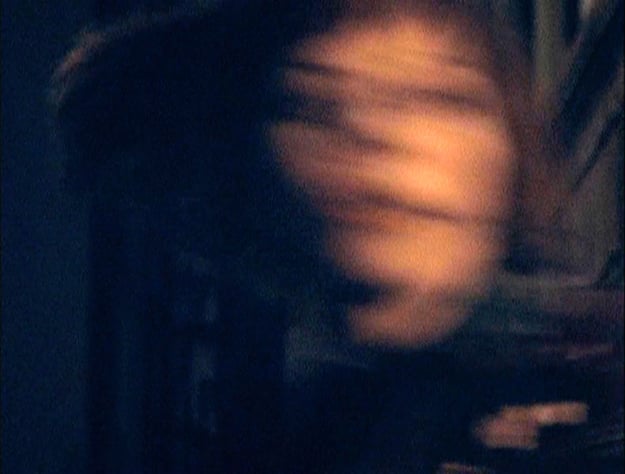
9 - First, we hear the gunshot, then the squeal and crash of the car. Then we go back to her, and she says, “I sat up and he was nowhere.” This is where you see how much you can do cinematically with very little. How do you shoot an accident when you have $2.50? All we had was two people walking down the street, yet you had to believe this immense accident happens where he is killed by a car being driven by a dead man. The imagination of the viewer partners with the visual information — police lights in a puddle, a shoe — her off- and on-screen dialogue, and the sounds of the gunshot and car. I used a lot of texture throughout the movie because she’s really in a fugue state. I wanted the viewer to be disoriented the way that she is.
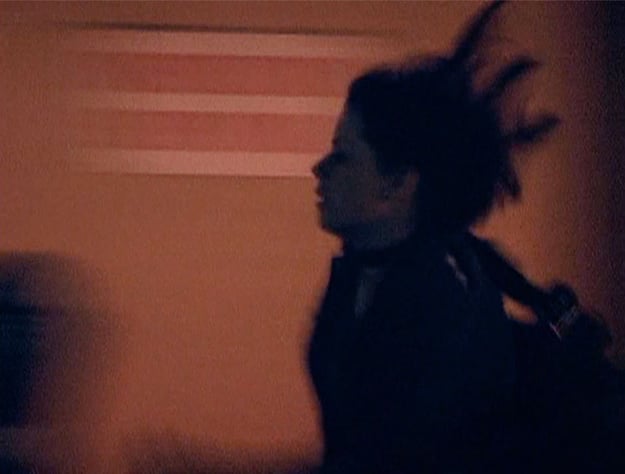
10 - Paula’s first instinct is to run. I wanted it to feel kinetic, inside her shattered experience, which is how we cut it — the way she’s seeing everything is cut up. Cinematographer Ellen Kuras was running alongside Fairuza with the camera. The coloration here was by happenstance but it was one of those things where it’s the beauty of choosing in the editing room. One of the photographers that had a lot of influence on me here — for the coloration, light, and atmosphere — was Nan Goldin in her book, The Ballad of Sexual Dependency. Those are photographs of people living in the margins of urban life — artists and musicians who are on the edge of survival. Paula belongs in that tribe. Overall, this sequence is about collapsing time and memory, and understanding a character in shock, who is telling a story about a near-death experience she just had. She’s reliving it and telling it to her mother, who is no longer a part of her life, and yet she’s the one person Paula needs to talk to. This part of the film is getting at the part of existence that is beyond words, for which cinema is so well suited.
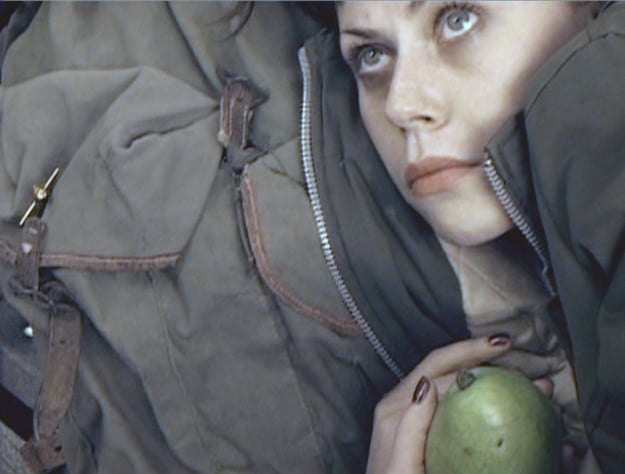
11 - In the present, her boyfriend, Vincent, calls and we’re pushed further into the past to see how they met. She’s sleeping on the street because she’s left her family home, and he gives her a pear. The theme of people rescuing other people is big in the film, as she rescues the kid and finally her own child. She has such an expressive face, and we can imagine what she’s seeing. Ellen was shooting handheld, and I thought a lot about framing. There’s something so primitive and biblical about the pear. It’s a reverse Garden of Eden situation, like she gets to reclaim her innocence by eating this piece of fruit. We’re hearing voiceover and crows — I grew up in the country, so crows are an important sound for me. Then this guitar score, which has a softer, more merciful vibe than the otherwise minimalist score. The music speaks to Vincent and her because, to believe she’ll ultimately return to a relationship with real value — one that could support them having a child together — you have to believe in their relationship.
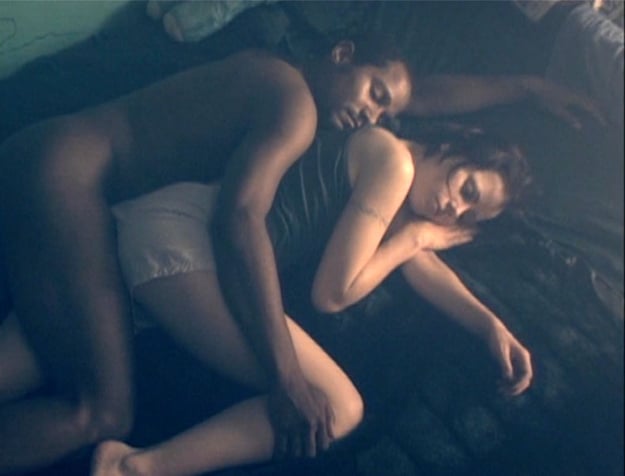
12 - Voiceover tells us how Paula believed that Vincent had been drawn across the sky all the way from Haiti to save her. We see their yearlong relationship through these series of high shot stills in bed. We dissolve quickly between them as Paula and Vincent position increasingly further away from each other. Distance is growing between them. It’s one of my favorite moments in the film. The editing was very much about instinctively tying moments together. We had so many different angles and ways of telling the story. Editor Sabine Hoffman is very gifted. She and I tried many of ways of doing it and having the past telescope down so that everything gets compressed. Finding the right triggers to send us into the past was a constant theme for us, so the audience wouldn’t feel like, “Wait a minute, I was having such a good time over here,” but rather have them ready to go.
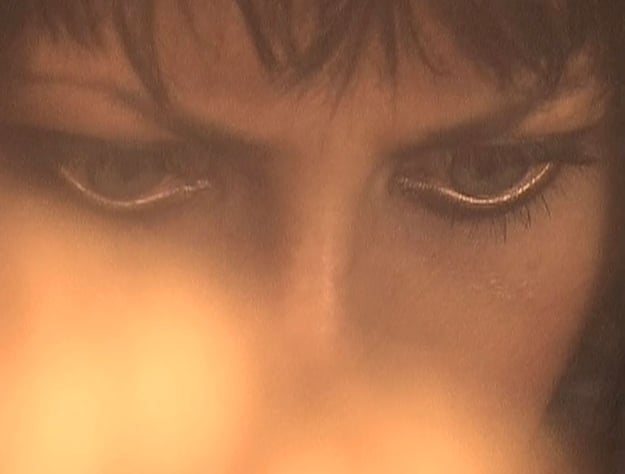
13 - Fairuza’s performance is so good because it’s difficult to portray fullness and emptiness at the same time — Paula is filled with experience but also not able to think anymore, almost in a trance. She tells her mother, “I’m pregnant,” and plays a game where she drops a knife on her hand, which says a lot about her character and self-destructive risk-taking. The foreground and this extreme closeup work nicely to give a near flame effect — a mystery, a sense of her inner feeling. She’s so inside of the moment, thinking about the baby sucking the life out of her. I guess the style of the sequence is intensely personal and impressionistic. Being a human being is not a linear experience — we are constantly thinking, imagining, remembering. I was using all the tools I had to try and get close to that, so in a way this sequence is quite realistic. What’s unrealistic are unified scenes where people exist only in the present.
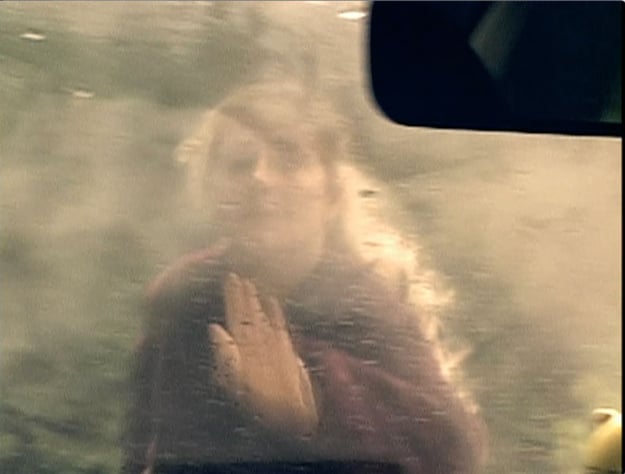
14 - We hear the score, the car doors, the engine, and her mother saying, “Don’t do this!” She’s trying to get Paula’s attention, but Paula’s already onto the next thing, her impulse taking her away. Her mother is almost dissolving, like a reflection in water that will be gone in a second. You see how helpless the mother is, but also that the past — and the past in that house — is something Paula must escape. What is unsaid in this sequence is as important as what is verbalized. Through montage and voiceover, we understand why Paula left home the relationship with her mother’s boyfriend, her way of looking at the world as a series of signs, and her strange, instinctive, compulsive decision-making. We have followed the thread of the news about the accident through the whole film until we get to Paula.
Rebecca Miller portrait by Lynn Goldsmith
Screenpulls: MGM Home Entertainment