
It’s often been said that ‘life imitates art.’ In the case of episodic Directors working on political thrillers, that adage is reversed as they seek choices that reflect the accuracy of real world situations for their fictional settings. To reveal how they do this, we recently spoke with five Directors who have worked on prominent television series past and present regarding how to ensure believability in portraying situations that might have taken place in the halls of power from the FBI to the White House.

Alex Graves on The Diplomat:
“The goal has really been to be as accurate as possible. Start with accuracy, and if there’s something that’s a little uninteresting or — like one example is that I was told that if there was an emergency behind the US Ambassador’s house for the season finale of season two of The Diplomat that there’d be like eight agents running to [Vice President character] Grace Penn, and I was like, ‘Well it should be more like 20,’ so I did change it from eight to 20 because it wasn’t visually dramatic. But that’s like the biggest change I’ve made recently in anything I’ve done because normally you’re interviewing people and you’re trying to find out what happens because you’re not only trying to get it right but what really happens is usually more interesting than anything anybody can write.”

Eric Stoltz on Madam Secretary:
“On Madam Secretary, the writers wisely engaged a company called The Glover Park Group, which was, at that time, a bipartisan group that worked with nonprofits and companies around the world. And they would point us towards a lot of growing stories that would soon burst into the headlines. Which allowed our writers to be ahead of the curve. And I would then contact them with specific questions about behavior and protocol, and how it functioned. So that I could then give the Actors the parameters of the playground and say, ‘You can’t get this close, but you can speak your mind from here and here’s how you would behave in a situation historically.’ And I found that always helped the Actors.”
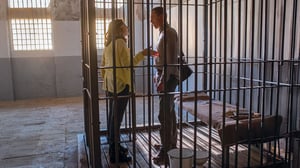
Lesli Linka Glatter on Homeland:
“It’s absolutely a balancing act between being responsible to the reality and telling a story. And you want to keep that in balance and servicing the characters. We are storytellers, but I do feel a huge responsibility. I don’t have that access in real life. I can’t sit in a meeting in the room when they’re discussing classified information. But I can have access to those people who have sat in that room in that circumstance and try to do it as if it’s being portrayed in the most real way. One of the things that we did when I was on Homeland is every year we would all go to DC and meet with the heads of the CIA, NSA, DNI, State Department, investigative journalists, generals, and [Executive Producer] Alex Gansa would ask, ‘What keeps you up at night? What are your deepest fears for America and the world?’ And that’s where the new season would come from. It was totally extraordinary to be part of that process. We didn’t know from season to season what the story would be until after that session. I mean you have the bigger kind of macro world of politics and what’s going on specifically in the world you’re talking about. And then you have the interpersonal, you have the characters. And it has to have that balance. You have to be seeing it from a clear point of view. In the case of Homeland, it was Carrie Mathison, Claire Danes’ character.”
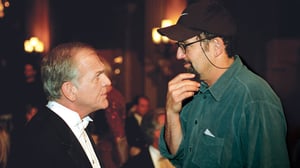
Thomas Schlamme on The West Wing:
“I can’t completely define the word ‘authenticity.’ I know it when I see it, but everyone has kind of a different kind of view to every incident. So you can say you want to be authentic to what that incident was but that’s authentic to six different people who were sitting in the room. So that all I can really do is try to figure out what would be the bigger umbrella, the emotional truth that was going on in that room. Everybody’s feeling different. But what took place? What was the true obstacle in that particular scene that they had to get past. And that’s what I spent so much time working on. I read a lot. I do a lot of research. I try to talk to as many people who have been part of that world. We went to Washington, DC. We interviewed a lot of congressmen at that time who thought we were crazy to do a show about politics. ‘You’re never gonna get it right.’ We were in [Former United States Representative] Barney Frank’s office, I remember, and he was eating a sandwich, and there was food on his shirt and, it was like, he had stacks of newspaper and it was like chaos in that room. This was at 10 in the morning and he’s probably already worked a good 5 hours. And I went, ‘Wow! I don’t care what he’s saying. He’s giving me so much about how important this is to what he’s doing.’ And the last thing he wanted was, ‘You guys are going to go fuck it up now.’ What you got was everybody cared. This was, remember, a different time. But what you did get at that moment was everybody, wherever we were talking, cared deeply about what they were doing. They were making mistakes here and there and they understood they were making mistakes, but they cared. That’s what got translated. And that’s what I’m talking about. Emotional truth.”
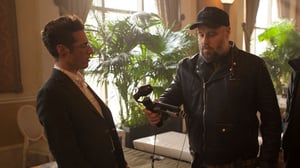
Chris Grismer on Designated Survivor:
“As the Director you’re trying to portray the story in an accurate way. Especially if it’s a modern political thriller or a historical political thriller. So you try to research how things would be presented like, what does the location look like? What do the uniforms look like? How do people address each other? You try to find ranks, especially if there’s military involved you make sure that the ranks are accurate. On Designated Survivor we had a lot of the different generals discussing things with the President and that was always — when you have 12 different military members in the room — trying to maintain accuracy on who would speak first and who could speak to the President. That was always a test. But I think you do have a responsibility to try to tell the story accurately and lay the groundwork for that.”