Books have long served as fertile ground for filmmakers, offering rich worlds, unforgettable characters, and deeply resonant themes. But translating a written work into a visual narrative is both an art and a strategic process. On April 27, the Jewish Committee (JC) meeting brought together a panel of accomplished Directors who have successfully adapted beloved books for the screen to during the discussion, From Page to Screen — The Art and Craft of Adapting Books for Film and Television.
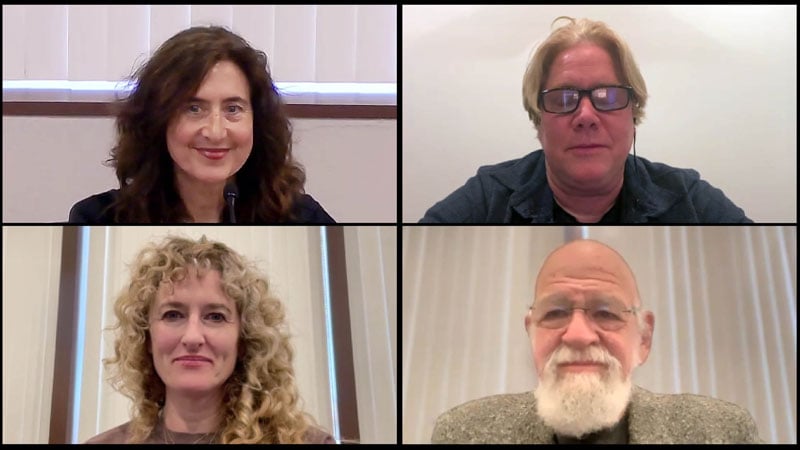
In a conversation moderated by Director Varda Bar-Kar (Janis Ian: Breaking Silence), Directors Stephen Chbosky (The Perks of Being a Wallflower), Jeremy Kagan (The Chosen) and Amber Sealey (Out of My Mind) shared their journeys from discovering a book to bringing it to audiences.
During a discussion that illuminated both the creative and practical realities of bringing stories from page to screen, Sealey voiced her opinion that the most important aspects of this process are: having an author who understands that the craft of visual storytelling is different from the storytelling that happens in a book; having Producers who understand and support your vision for the story; and knowing what parts of the book are important to tell versus what parts are not applicable. “Every film you learn a lesson, millions of paper cuts,” said Sealey. “I learned that hiring people with disabilities [as she did for her feature Out of My Mind] does not take more work.”
Kagan noted that if a book has a good story with good characters that makes it a story worth telling, how you read impacts how you see the story that is within the book to tell. Said Kagan, “I step back from the book and embody a main character and tell that character’s story which subsequently results in some chapters falling from the book.” He recalled being contacted by Producers who were interested in making The Chosen. He was handed a script that wasn’t very good then, after reading the book about being an orthodox Jew, requested to rewrite the script and pushed for a more expansive view of Jewish life.
Chbosky revealed that there were very personal reasons why he wanted to direct the film version his coming-of-age novel, The Perks of Being a Wallflower. The story was fictitious, but the locations were not. After working adapting his book into a screenplay for more than a year, he felt like this was a movie he had to make himself because he wanted to tell the story a certain way. Sharing part of his process, Chbosky said, “When I’m looking to adapt a story and cast for it, I’m looking for an essence — a truth inside [that individual’s performance].” He noted that casting also impacts people’s willingness to take on a book adaptation (e.g. Julia Roberts in Wonder and Emma Watson in Perks).
The discussion also covered topics including: what signals to a filmmaker that a story on the page might thrive as a film or series, the elements they look for in a potential adaptation; and shared some of the practical steps of adaptation such as preliminary conversations with authors or rights holders, the process of optioning literary material, how to balance fidelity to a book’s readership with the demands of cinematic storytelling, and what makes a literary property attractive to studios, streamers, and financiers and the unique challenges that arise when adapting material with an existing audience.
About the Panelists:
|
|
|
|
|
|
|
|
 Varda Bar-Kar (moderator)
 Stephen Chbosky
 Jeremy Kagan
 Amber Sealey
About the Jewish Committee
In February 2024, the DGA National Board granted provisional status to a new committee to address various issues of concern to the DGA’s Jewish members, including issues related to employment and rising anti-Semitism in the workplace and its impact on film and television. Members wishing to join the Jewish Committee will need to self-identify via their account settings. They may also opt to receive email about the events and meetings for any of the Guild’s Diversity Committees by updating their email addresses and subscription preferences as part of Email Settings in their personal account.