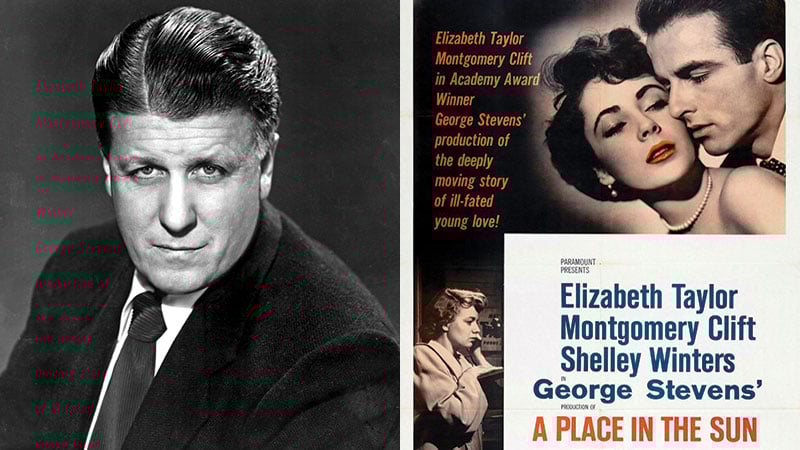
On December 9, the Special Projects Committee hosted the latest installment of their Classic Films Series with George Stevens’ DGA and Academy Award-winning 1951 feature, A Place in the Sun. The series screens iconic movies, followed by a discussion about the Director’s contribution to the world of cinema.
The evening in the Guild’s Los Angeles Theater began with a welcome from Classic Film Series Subcommittee member Luc OuYang, followed by an introduction of the film by Subcommittee Chair Arthur Allan Seidelman.
After the screening, Seidelman moderated a discussion on Stevens’ legacy with Special Projects Committee Co-Chair Michael Goi and special guest, Director George Stevens, Jr.
Via video, Stevens, Jr. recalled how his father would rely on ‘showing rather than telling’ the audience to ensure the story got across and said, “One of the many things I learned working with my father was the idea of respect for the audience. Learning from him to trust the audience was as valuable a thing as has happened to me.”
Goi noted how the actors’ performances in A Place in the Sun and Stevens’ collaboration with his cast continue to inspire Directors and how they work with talent today. “The performances are a testament to the value of exploring the nuance of performance in that way. But also, your dad would screen dailies for the cast and the crew every day and invite the cast over, which is almost never done anymore. So, I greatly admire his craft and his knowledge of how to get everybody on board the same movie at the same time.”
Seidelman zeroed in on the famous close-ups of Elizabeth Taylor in the film and shared his memory of directing her in the movie for television Poker Alice. “The intimacy of the close-ups in A Place in the Sun is bearable to the highest degree, but unbearable because of the intimacy. I had the privilege of directing Elizabeth Taylor in a film and I was doing a scene of the first kiss between Elizabeth and Tom Skerritt in the story. And as I moved in the camera tighter and tighter, Elizabeth said to me, ‘Arthur, what are you looking for?’ and I said, ‘I’m looking for George Stevens.’”
Video from this conversation coming soon to the gallery below.
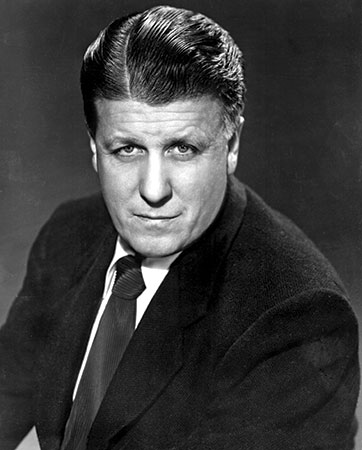 About George Stevens
George Cooper Stevens (1904–1975) was born in Oakland, CA. At the age of 10, his mother gave him a Brownie camera and he began photographing the city and portraits of her. At 17, Hal Roach Studios employed him as an assistant cameraman on shorts of Rex the Wonder Horse. He worked as DP and a gag writer on 35 Laurel and Hardy shorts where he learned that comedy could be “graceful and human.” In 1933, Stevens made his feature directorial debut with the comedy, The Cohens and Kellys in Trouble. His big break came when he directed Katharine Hepburn in Alice Adams. He would go on to direct such classic films as Swing Time, Gunga Din and Woman of the Year.
Stevens served as president of the Screen Directors Guild (SDG) from 1941 to 1943, but after seeing the Nazi propaganda film, Triumph of the Will, he joined U.S. Army Signal Corps in World War II and headed a film unit from 1943 to 1946 where they documented D-Day and the liberation of the Dachau concentration camp.
1946, Stevens resumed his duties as SDG President and served in that post until 1948. In 1950, during the McCarthyist scare and related Hollywood blacklist, he defended Joseph L. Mankiewicz from Cecil B. DeMille's attempt to recall him as president of the SDG. As a result of his experiences during the war, his films became more dramatic with classics such as I Remember Mama (1948) and The Greatest Story Ever Told (1965).
Stevens received Oscar nominations for The Talk of the Town (1942) and The More the Merrier (1943); and Oscar and DGA nominations for Shane (1953) and The Diary of Anne Frank (1959). He won the DGA Award and the Academy Award for “Best Director” for A Place in the Sun (1951) and Giant (1956). In 1960, Stevens was honored with the DGA Lifetime Achievement Award.
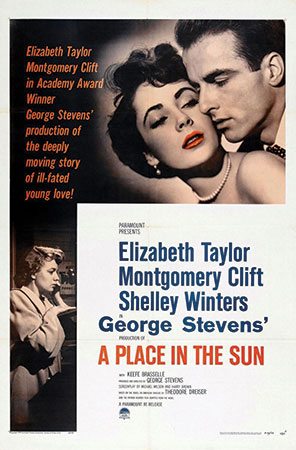 About A Place in the Sun
A working-class young man becomes romantically entangled with two women — one who works in his wealthy uncle’s factory, and the other a beautiful socialite — leading to a tragic love triangle.
Based on Theodore Dreiser’s novel “An American Tragedy," Charlie Chaplin called A Place in the Sun "the greatest movie ever made about America” and David Mamet, in his book Bambi vs. Godzilla: On the Nature, Purpose, and Practice of the Movie Business, included A Place in the Sun in a list of four “perfect” films, along with The Godfather, Galaxy Quest and Dodsworth. In 1991, A Place in the Sun was selected for preservation in the United States National Film Registry by the Library of Congress as being “culturally, historically, or aesthetically significant.”
IMDB.COM link: A Place in the Sun