On Saturday, April 18, DGA members and their guests gathered in Theatre 2 of the Los Angeles headquarters for the 10th DGA Directors Retreat. This year's event offered a day of in-depth conversations with distinguished directors who offered advice on how to get the best performances out of actors.
"This year we pose the question, 'What do you say to an actor after you say hello?'" said Retreat Committee Co-chair Jim Drake in his welcome address. "To help us get the answer we gathered together a group of esteemed directors from a wide variety of backgrounds."
In her introduction of keynote speaker director John Badham, Retreat Committee Co-chair Christina Stevens noted, "He's earned the reputation of an 'actor's director.'"
"Actors are our creative partners," said Badham. "We want to enable them to give the best performances but we can't do that if they don't know who we are. They need to know where we're taking them and what we expect from them. They need to be encouraged and not judged, even when they go wrong."
Moderator Jamie Babbit asked director Neil LaBute if his own early experiences as a student actor helped shape his directing style. "I appreciate actors and what they do," explained LaBute. "Maybe that's why I handle them the way I do. Too often I find directors casting better looking versions of themselves and trying to coax those people into doing it the way they would do it. I'm big on casting actors who will take that part on the page and really make it come alive."
David O. Russell engaged Kimberly Peirce in a conversation about how the audition process can help the director and actor find their way to the best performance. Peirce showed the audience one of the original audition tapes for Hilary Swank's Oscar-winning performance for Boys Don't Cry and said, "I look at their resume to see if they're trained. If they've had some kind of training, that means that you're not going to be training them on the set. Then I look to see if they're all over the place in an audition, or if they're making a choice. In this case you see that she's not making the right choice, but that she can clearly carry something."
After lunch, Special Projects Chair Jeremy Kagan moderated a discussion with Oscar winning actress-turned-director Helen Hunt and her father, director Gordon Hunt. Using a clip from the DGA Award-Winning comedy series Mad About You where father directed daughter to an Emmy Award-winning performance, Gordon Hunt explained how he breaks the scene down to find the shifting balances of power.
"I teach an acting class," said Gordon. "And I do this exercise that has to do with who has the power, when did they get it, how did they get it and how does the other actor play giving up the power?"
"I believe that every director should take an acting class at some point," said Helen. "Pulling tricks to get a performance out of an actor is not my favorite way to direct. When I directed Then She Found Me, I found it more empowering to say to them, 'In this next scene I've got to make sure that she feels this way so I need you to do this.' They're storytellers so they feel that they're part of the team making the movie and will throw themselves into the choice you're asking them to make."
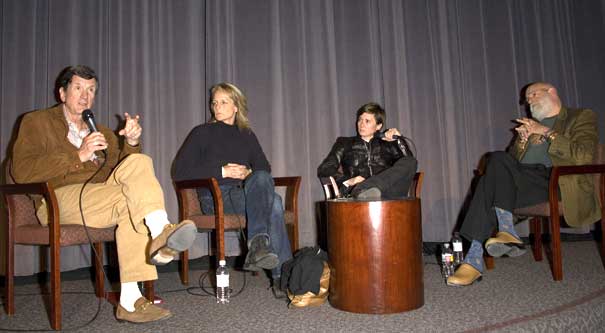
The final panel of the day featured Badham, Peirce, Helen Hunt and Kagan in a freewheeling conversation where they dispensed advice, told war stories from the set, and answered questions from the audience.