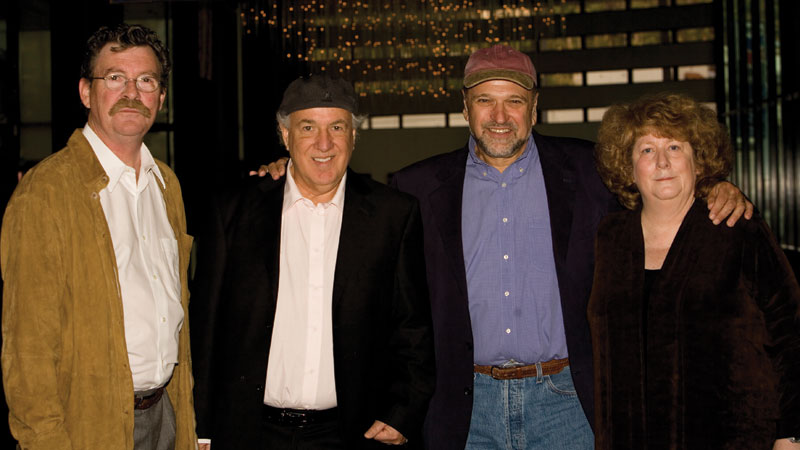
Western AD/UPM/TC Council Chair Cleve Landsberg welcomed the audience stating, “The purpose of these seminars is to add knowledge and insights to DGA members’ skill sets to keep them as the best practitioners of their craft.”
The seminar covered the critical elements of VFX filmmaking, taking the participants from pre-production through post-production. Topics included: storyboarding VFX sequences, on set data capture of live-action footage and transforming it into 3D CG files at a VFX facility, and First and Second Unit collaboration. The panel illustrated their discussion with clips from the film that showed the different stages of shots from the animated storyboard of pre-visualization (pre-vis) through to the finished product.
Because The Guardian told the story of an elite U.S. Coast Guard unit, their challenge was that of filming realistic looking water rescue sequences, without breaking the budget or endangering the cast and crew.
“In the beginning, our biggest concern was how do we make this real,” said Davis. “If the water wasn’t a real character the movie wasn’t going to work. So we studied all kinds of footage of storms and Bill understood what it was he had to create.”
In order to make waves the size they needed to portray storm-at-sea conditions, the filmmakers created a new type of wave tank capable of simulating 20-foot seas and enhanced the footage with digital animation. Davis also commented on the dizzying array of possibilities digital filmmakers have at their disposal.
“The danger of having total freedom in a visual effects movie is you can make all these incredibly jazzy shots, but they take you out of the movie,” said Davis. “Even though we had the ability to do all of these slick shots we wanted to restrain ourselves so that there was a kind of you-are-there quality. It was important to figure out how to do this and not have a zillion and one pieces. This was the first time I had the chance to imagine a shot and have it come alive in a pre-vis situation. I was able to say, ‘let’s go to a 50mm lens, let’s try a wider lens, let’s lower the camera.’ It was really a great experience to be able to design certain shots and then have them come alive.”
Mesa stressed the importance of not only finding the right technique to accomplish a visual effect, but keeping the lines of creative communication clear to make sure that the end product would adhere to the director’s vision. “It’s very easy to have an idea and technically know how to put it together, but it might not suit the film. It might be a great effects shot, but it might not tie the heart of the story together. It was really important for me to absorb what it was that Andy wanted.”
“This was one of the most difficult, yet exciting projects I’ve ever experienced,” said Zwerman, who thanked each member of the DGA team who helped accomplish the complex shots needed for the film.