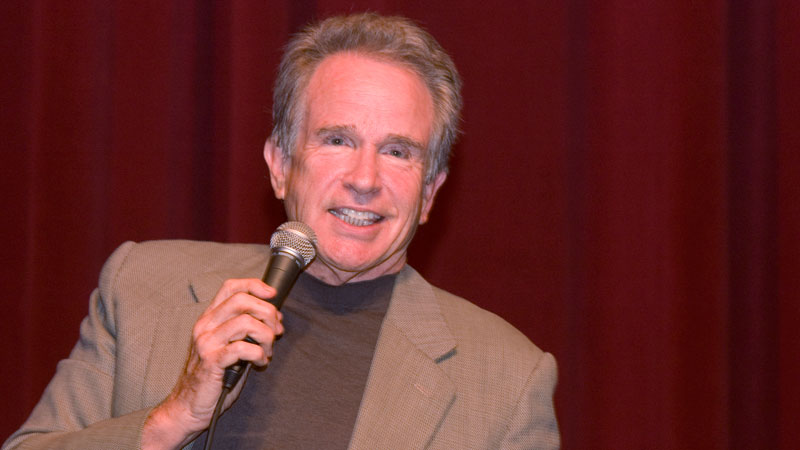
Beatty produced, directed, co-wrote and starred in the 1981 film, which garnered 12 Academy Award nominations and both an Oscar and DGA Award for Beatty as Best Director. The film, which gets its long-awaited DVD release on Oct. 17, is a romantic political drama set in the midst of the Russian Revolution and stars Warren Beatty, Diane Keaton, Jack Nicholson, Maureen Stapleton, Paul Sorvino, Jerzy Kosinski, and Gene Hackman.
One of IDC’s founding members, director Penelope Spheeris, welcomed the audience and expressed her admiration for Reds. Miller said he was likewise influenced by the film and counts it among his favorites: “To me, as much as anything else, it’s a marvel that it does exist. I wonder and doubt that there will ever be a film like this of this scope that is so perfect in every way.” Beatty received a standing ovation as he took the stage after the screening. Early on, he singled out the outstanding contributions of film editor Dede Allen, who was in the audience and also received a standing ovation.
Beatty said it was not an easy film to get financed and thanked his backers at Paramount Pictures, including then-president Michael Eisner, who was attending the Reds screening. “The wonder is that that subject got financed – and it would be questionable whether that subject would be financed today,” Beatty said. He spoke about his decision not to do publicity for the film at the time, saying that he remains wary of massive publicity campaigns for films, since they often “cloud” the way people view a movie. Beatty said he was encouraged to tell the real-life story of radical American journalist John Reed by members of the Russian film community. That set into motion a long period of writing treatments and shooting historical interviews, some of which were used in the film. As to the central characters, including Reed (Beatty) and Louise Bryant (Diane Keaton), “people didn’t realize at that stage of their lives that [the revolution] was very much more complicated than they wanted it to be,” Beatty said.
Beatty also discussed his approach to filmmaking: “When I make a movie I feel, why make another one? And then when I get sufficiently disgusted with myself, which takes longer and longer, I then can work up the enthusiasm to go through the torture of making a movie.” With the audience hanging on every word, and eager to stay well past midnight, Beatty’s wife, Annette Bening, joked from the audience that she was taking the kids and going home. Beatty’s son Benjamin got in the last question: “How long was the first rough cut?” “About 4 hours, 15 minutes,” Beatty said.
The story has a stronger contemporary relevance than it did during the early days of the Reagan Administration, Beatty concluded. “The relevance of what people will turn to when they have nothing else to turn to is more apparent now than it was, at least to Americans, in 1980 or 1981,” he said.