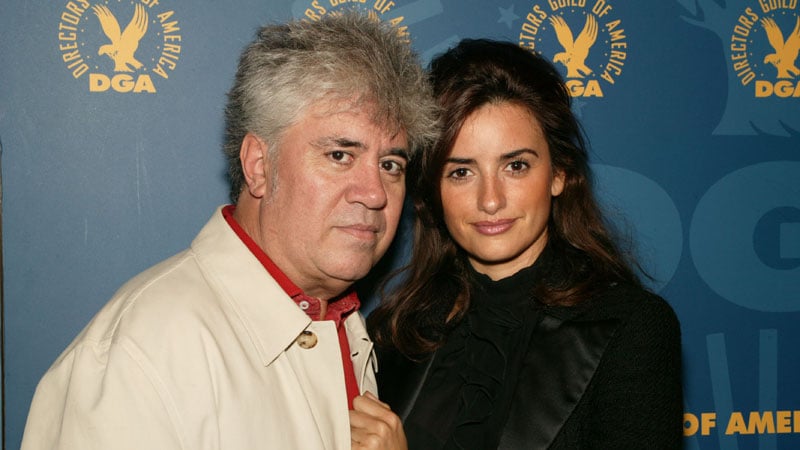
Almodóvar's seventeenth feature film explores the lives of three generations of women in a working-class Spanish family as the volver (returner/ghost) of a mother who died in a fire comes back to comfort her daughters and granddaughter and settle accounts from the past. The 2006 Cannes Film Festival honored Almodóvar with the “Best Screenplay” award for Volver and gave the “Best Actress” prize to his ensemble cast of Penélope Cruz, Carmen Maura, Lola Dueñas, Blanca Portillo, Yohana Cobo, and Chus Lampreave. Volver was also chosen “Film of the Year” at the 2006 San Sebastián International Film Festival.
“The Global Cinema series is the chance for American filmmakers to see films from cultures around the world and bridge the false divide that keeps us from knowing we are all linked,” said Victoria Hochberg, DGA National Board member and co-chair of the Special Projects Global Cinema sub-committee in her introduction. “We are thrilled to have with us renowned Spanish filmmaker Pedro Almodóvar.”
A fan of movies since his childhood, Almodóvar confessed that in his youth he had a somewhat erroneous view of how movies were made. “I thought that the actors of a movie did everything — the writing, the directing,” said Almodóvar. “When I was sixteen I started reading about cinema and found out how it was done and decided that was what I wanted, to be behind the camera inventing the story that I wanted to tell.” But the path to success was not easy for the young would-be director who was making his living as an office assistant at the telephone company. He recalled working fast so that he could use the office equipment to write his own scripts and getting his film education by making eight-millimeter productions with his friends. He recalled leaving the telephone company six times before finally succeeding with his 1980 film Pepi, Luci, Bom y otras chicas del montón.
Later in the discussion, actress Penélope Cruz joined Almodóvar and Hanson onstage to talk about her collaboration with the famed director. Cruz revealed that part of Almodóvar’s process included rehearsing with the cast for three months before the cameras turned. “We’d go to Pedro’s office and spend six hours with him reading and talking about it so we got to know each other well,” said Cruz. “Everyone had different ways of working, but that family energy was there and there was a lot of trust. I think this movie would be very different without that time.” Almodóvar explained that on top of building a familial relationship among his actors, the period is also spent fine-tuning both his cast and his crew. “I direct them like a conductor directs an orchestra,” said Almodóvar. “ There are so many things to do, not only rehearsing the dialogue, but finding the tone, and crafting the look of each character.”
Despite Volver’s context being the culture of death in Almodóvar’s native region of La Mancha, the film reveals a richness and humanity that results in both hilarious situations and deep, genuine emotion. Almodóvar explained that the difference between Volver and the films he was making twenty years ago came as a result of his need to explore the themes of his own childhood and that many of the characters are drawn from actual women he knew. “This movie is part of that reflection,” said Almodóvar. “And after looking back, you can look forward to death, or the time you have left in the world.”