On Tuesday, October 11, 2005, members were treated to a screening of DGA past president Arthur Hiller’s satirical film, The Hospital at the DGA Theatre in Los Angeles. Made in 1971, the film was shown as part of the DGA Independent Directors Committee’s (IDC) Under the Influence Screening Series.
In her pre-screening welcome, IDC member Jamie Babbit shared the background of the film series. “Under the leadership of Steven Soderbergh, IDC established the Under the Influence Screening Series to celebrate seminal films from the past, which continue to inform the work of independent filmmakers today. Tonight we’re proud to bring you The Hospital. This film garnered significant accolades, amongst them an Academy award for the screenwriter Paddy Chayefsky, and a Best Actor nomination for George C. Scott.”
In The Hospital, Scott plays a cynical doctor battling bureaucratic superstructures on the one hand and the flakiness of some of the patients on the other. When he falls for an eccentric young woman (Diana Rigg) with an alternative view on everything, the road to liberation from burdensome responsibilities seems to open before him.
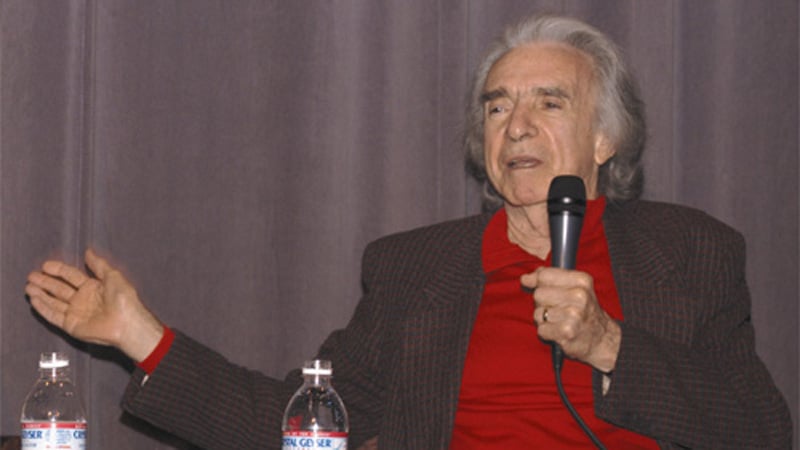
After the screening, Hiller was joined onstage by 2004 DGA Feature Award nominee Alexander Payne who served as moderator.
Hiller revealed that Chayefsky’s initial desire was to write The Hospital as a gothic horror story. “He sat down and got started, but being Paddy Chayefsky, he couldn’t just do a straight gothic horror story. Much of his personal feelings and what he was going through leached into the story. I always said that Paddy was the only genius I ever worked with. But with The Hospital, 15 years later Paddy and I would be having lunch in New York’s Carnegie Deli and still rewriting the ending. We thought it was good, but not good enough and felt that it really had to make the point that you can’t just think about a problem, you have to really get in there and do something.”
Urged by Payne, Hiller described the making of an intricate long shot from the film that they created in a single take without cutting. “It’s part of what I was trying to do in a style I call ‘messy good.’ It’s very hard for operators to do ‘messy good’ because they’re trained to be so perfect and do it so right. Even when you can talk them into it, it’s hard for them and they worry what their friends will say. So you have to create shots that you can’t do without being ‘messy good.’”
Hiller imparted a wealth of marvelous stories about the making of the film, working with the cast and crew, and the challenges of shooting the film in a new but unopened wing of New York’s Metropolitan Hospital. Due to a run-in with the local bureaucracy, they almost lost the location until Hiller convinced the star Scott to have tea with the hospital administrator and the chief of surgery, who wanted his autograph “for his daughter.”
Hiller also spoke on the way the film seemed to foretell the future of corporately managed healthcare. “We thought we were being funny with stuff like you can’t be operated on without your Blue Cross number, and look what happened. People have lost their lives because they didn’t have an HMO and couldn’t get into an operating room.”
Hiller seemed pleased that even three decades after its release, the film does not feel dated. “It has held up because its comments still work today. What The Hospital is saying is that you have to hang in there, and do something. There’s more to life than one level and there are people you have to help, not just on the operating table. Human beings everywhere need help.”
In 1995, The Hospital was selected to the National Film Registry, Library of Congress.