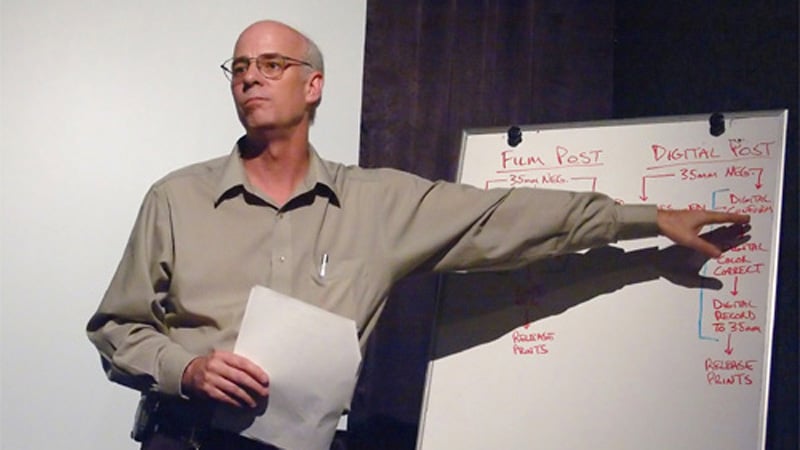
The DI process is an electronic bridge between the original film footage shot and the final film release version that offers filmmakers unprecedented creative latitude and control in changing, fixing and improving its look. Film is transferred into the digital medium via a scanner, then it can be manipulated via the wide array of available computer effects. Using Monaco’s new system and “Scratch” software, Moye gave Bay Area Guild members a demonstration of the process.
According to Moye, the DI process costs more and takes longer than traditional post production, so many studios still make an initial push to use film. However, the DI process has an almost infinite range of effects and can actually save the time and expense of re-shooting a scene that was damaged by poor lighting, grainy film, or scratches.
Members were able to view actual footage of a feature shot in various formats. The colorist had heavily annotated the demonstration print so that it was easy to understand and see what had been done to each shot. Enhancements included color correction, degraining, reframing, and transitions. They were also shown how the complex problem of blending Super 16, 35mm, and stock footage could be solved seamlessly and how special effects can easily be incorporated.