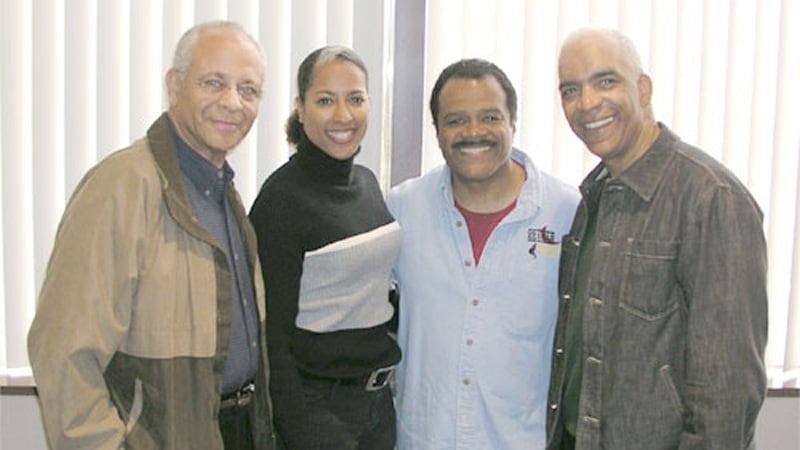
Lathan joined the DGA in 1972 and has been responsible for directing the pilots of hit sitcoms such as Martin, Moesha, and The Steve Harvey Show. His resume includes episodes of Hill Street Blues, Miami Vice, Sanford and Son and segments of numerous PBS programs including Great Performances, American Playhouse, Wonderworks and Sesame Street. His partnership with Russell Simmons has produced the highly successful HBO Def Comedy Jam series and the Peabody Award-winning series Def Poetry Jam.
A member of the Guild since 1973, Schultz is best known for directing a number of '70s classics like Cooley High, Car Wash, Sgt. Pepper's Lonely Hearts Club Band, and The Last Dragon. Cooley High and The Last Dragon have been credited for inspiring countless young urban filmmakers, as was evident in the audience Q&A session later that morning. Schultz's television work includes episodes of the dramas Picket Fences, The Practice, Boston Public, Ally McBeal, Touched By An Angel, and JAG. He currently directs and produces the WB's Everwood.
The morning revealed a few surprises like the fact that Schultz originally dreamt of a career as a jet pilot or an astronaut, but discovered film while attending the University of Wisconsin. "I spent most of my time watching movies by Bergman, Antonioni and Zefirelli. There were all of these great movies that spoke to people's dreams and visions and I got caught up in that kind of storytelling. I said, 'I'd love to be able to do that and tell stories about the black experience in that powerful way.' But I had no idea how to get there." Schultz eventually chose stage directing as the conduit to a career in film and television.
Lathan's dry wit often took sudden veers that left the audience in stitches as in the case where he was imparting some of his wisdom about the art of directing sitcoms. "The biggest challenge for me in doing situation comedies has been directing the pilots. Once you've established the show, you sort of fall into a groove. So I spend the time with the actors that I have to, and the time that I don't have to, I don't. I joke that my ultimate goal is to go to work and not say nothing to nobody."
Schultz revealed that experience gained in directing television has assisted him in other genres. "In television fast is always good. So I make sure the actors are as strong as they can be, given the material, let them do their thing and I do two or three takes and then move on. Sometimes that translates into the feature work too. The last feature I did, Woman, Thou Art Loosed was shot in twelve days. It was an interesting exercise. If you cast right, ninety percent of the work is done."
Asked for an anecdote for a moment in their lives when they realized "Yes, I'm glad I became a director!" Lathan answered, "I think it was when I got a royalty check in the mail for $110K from a show that had been sold to Japan. That's the one I remember the most," he laughed.
Schultz quickly responded, "I never had that epiphany. But I love to sit in the theatre and watch the audience experience the film like in Which Way is Up, which was the first time I'd ever seen people actually fall out of their seats laughing, or in Woman, Thou Art Loosed where you could hear a pin drop. It's very gratifying."
Lange opened the forum up to questions from the audience which ranged from how the directors compared the industry of the 1970s to today, to how they worked with their DGA team members. Both gentlemen took on the question of how to establish relationships with people in the industry so that work can come of it.
"Every morning I wake up with the same anxieties I've had for 30 years, and there's more at stake now," said Lathan. "We're in a business where the rule is you're only as good as your last success, and you can establish relationships with people at a network one day and the next you wake up and they're all gone."
"I think it all boils down to your work," said Schultz. "If you produce great work then people want you. Now if your question is how do you get that first work then I can't help you. All I can say is work on anything and everything you can get your hands on and do the best job you can do because that creates the relationship."
But perhaps it was moderator Lange who gave the definitive answer when he answered, "Don't give up. It is really no more difficult than that. Everybody has to get over the wall their own way, but the trick is don't give up because what they really want you to do is go away. What this morning is about is for you to realize that these guys have been doing this for 30 years and the common denominator is they never gave up."