Summer 2012
Film Noir: The Directors
(Limelight, 400 pages, $24.99 )
Edited by Alain Silver and James Ursini
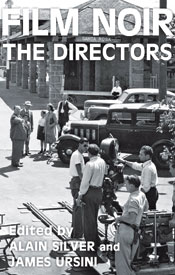 With a number of respected books on the subject, film historians Alain Silver and James Ursini have become something of the go-to experts on film noir. Silver has published some 20 books (in addition to his career as a Guild UPM and director), many of which touch on the dark genre. Coming on the heels of their Film Noir Reader series, this volume is a copious compendium that slices through the thick shadows of noir to explore the directorial know-how behind the tough talkin’ dames and double-crossing private eyes.
As a definitive study of the classical era of film noir (a period that Silver argues is bookended by Orson Welles’ best known noirs: Citizen Kane in 1941 and A Touch of Evil in 1958), the book explores the often complex and intricate elasticity of the genre and, more to the point, its directors. Among the topics discussed are Joseph Losey’s darkly uncompromising social indictments of the 1950s; the highly stylized pulp noirs of Fritz Lang; the unconventional, satirical noirs of Billy Wilder, who, as historian Cheri Biesen writes, injected venomous black humor into the “existential abyss” of his drowning protagonists. Notably mentioned is the only woman in this man’s world—the pioneering actress-turned-director Ida Lupino, whose low-budget noirs possessed a style every bit as hard-boiled as her male contemporaries.
Perhaps the fact that this comprehensive volume was co-edited by a working filmmaker gives it an energetic, hands-on feel, as it deconstructs the processes, in technical terms, that created the classical noir style. There’s Anthony Mann’s chiaroscuro techniques and experimental camerawork; Sam Fuller’s reliance on the long take and rapid action cuts; and the “doomed peculiarity” of Don Siegel’s narrative of space and movement, as the late Andrew Sarris describes it.Film Noir: The Directors requires a robust investment of time, but the effort is worth it. And while this volume makes no attempt to definitively answer the question of what film noir is, it does answer, definitively, what made noir tick: the director.
Review written by Carley Johnson.