SHOT TO REMEMBER
A Superhero is Born
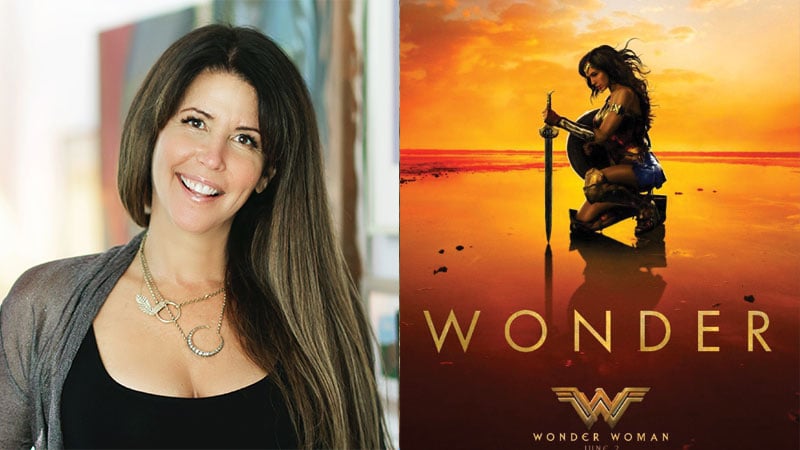
Patty Jenkins’ critically acclaimed 2017 feature, Wonder Woman, introduced the warrior princess to a new generation. The film marked the first time a female Director helmed a live-action film with a budget exceeding $100 million and is widely recognized as a groundbreaking entry in the genre. In this article, Jenkins describes how she created the scene where our hero comes into her power.
By Rob Feld
 From the moment she got the job directing Wonder Woman (2017) — the superhero’s first appearance on the big screen — Patty Jenkins got to work on the No Man’s Land scene. Set during World War I, Diana (Gal Gadot) — who discovers herself as our Wonder Woman in the scene — falls in love with American fighter pilot Steve Trevor (Chris Pine), who crash lands at her hidden, idyllic island of Themyscira and brings with him the death and danger rampaging through the outside world. Intent on destroying the source of the evil, she goes with Steve to the Belgian front. There, the impossible-to-cross No Man’s Land sits between Belgian and German trenches, with the Belgian army unable to advance. Determined to help the villagers dying on the other side, Diana bucks Steve’s admonition that there is nothing they can do. She musters the courage to discover her powers and crosses, clearing the way for a charge across the impossible terrain that turns the tide against the Germans.
“It was the singularly most important scene in the whole movie,” Jenkins recalls. “I knew there had to be a real intentional build to this scene for it to bouquet and release in the way I wanted it to. The first moment you see a superhero in the suit is huge. What is it that pushes her to transform? It had to be the most epic, emotional scene with a clear intention: she wants to save the world.”
Shot on film over the course of one week, Jenkins’ insistence on verisimilitude led to the decision to shoot the scene on a practical location, rather than rely on CG.
“We built an epic and realistic muddy hell of a No Man’s Land on the backlot of Leavesden Studios, in England. It was cold, debris-filled, and as dangerous to move through as it was for the soldiers back in 1917. The whole scene was very challenging. Because of the required speed, movement, and tone of shots I wanted to get, we built a football-style wire cam rig over the whole field, which could handle our massive cameras. The rigging was elaborate and expensive, but it was able to do absolutely anything and made shooting in such a difficult yet very important location possible. You simply cannot do a WWI movie without No Mans Land — and it had to feel authentic.”
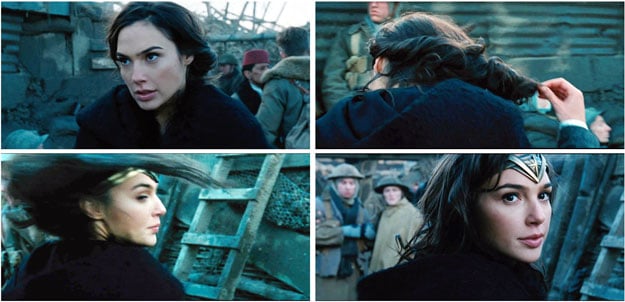
A great challenge is revealing a superhero as epically and magically as is demanded. So, every moment of this sequence was one of the most important. I wanted to nail her transformation and emerge from our more reality-based film with a subtle homage to Lynda Carter’s “Wonder Woman” TV show spin; one that blended the two things into a realistic unveiling of her suit. So, when Diana turns from Steve to gear up as the superhero she is finally ready to be — donning her tiara, dropping her cloak, and revealing her iconic lasso and shield — we swept the camera in a 180-degree slow motion move counter to her turn, to complete a 360-degree turn. It was tricky timing to get the perfect take, as I’d handpicked these talented background actors who could bring a lot to the party by giving us incredible reactions to what we could not see yet, thus building the escalation to the reveal.
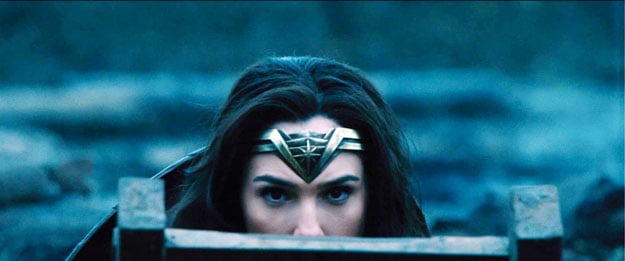
This closeup, a long shot of Diana climbing up the ladder from the trench to No Man’s Land, serves as a slow and building reveal to the money moment “suit reveal” ahead. Simultaneously, her determined expression, juxtaposed with the voice of Steve and the others in the background — signaling the impossibility and certain suicide of even trying — is the first step of dramatic build toward a seemingly impossible battle ahead. It is exactly what makes her victory there so shocking and satisfying. So really, this shot is all about performance and Gal did a beautiful job locking into Diana’s bravery and willingness to act against all odds. We shot 35mm Kodak Vision3 stock on Panavision cameras, with an aspect ratio of 2.39. With that you get to embrace this truly cinematic moment. My Editor, Martin Walsh, did a tremendous job flowing through the series of shots with exactly the right emphasis and timing on each.
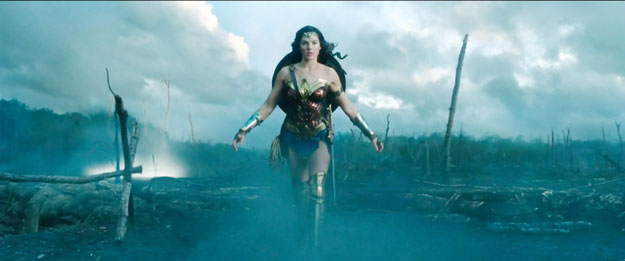
This shot is the moment — our first look at Diana, now fully adorned and emotionally ready to make her first move as our Wonder Woman. We hold–the stunned pause before the onslaught–still in slow motion. For the framing and look of this shot, I had in mind the grandiosity, grace, clouds and beauty of the old Columbia Pictures logo’s “Torch Lady.” We tinted the background clouds with some of the warmth of magic hour light. Throughout the field I also added practical smoke to the ground that we tinted with cyan powder. We played with the tint of that smoke for a long time, finding just the right color to subtly wrap through the scene and juxtapose with the sky. It was a difficult balance to strike on a real location, but I knew that the grit, wind, and elements on the skin and hair would, as always, make a big difference to the drama of the scene.
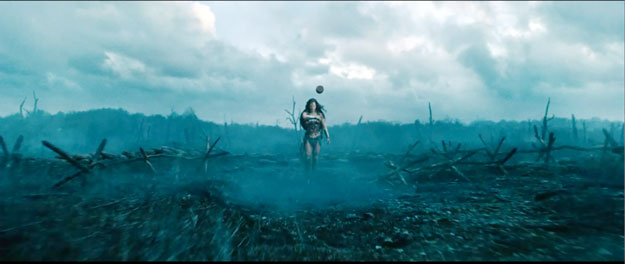
The fun of this rapidly tracking, bullet POV shot, is that it is a means to reveal and see unleashed the first of several of her thus far unforeseen powers. By taking the POV of the bullet, we clock that she can clearly see it — in super-slow motion — rapidly approaching. This is a fully live action move, with only the bullet in CG. The wire rig let the camera rush toward her, making it exciting and real in a way that VFX can sometimes struggle to do. Scoring the scene was very difficult. We needed a perfect, continually escalating, highly emotional and internal, yet driving and externally exciting piece. It was one of the first things we started working on. My Composer, Rupert Gregson-Williams, and I wanted to nail every second so, after the movie was complete, he wrote an entirely new track in a day or two, based on all we had learned.
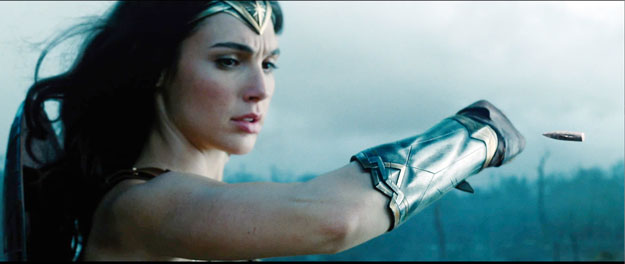
This is the second important reveal of her powers — even she doesn’t know if it will work. She has only seen guns slaughter her kinsfolk on Themyscira. She is slowly realizing that only she is special and, with this special suit, is willing to risk her life to see if she can stop the guns Wonder Woman famously hates. This shot was one of the important ones to do on a sound stage because of how exact it needed to be in its tracking and smoothness, particularly because it was in super-slow motion. The camera was static next to Gal on a treadmill. It was not easy for our gifted Cinematographer (and one of my greatest partners) Matthew Jensen, and the equally talented VFX Supervisor Bill Westenhoffer, to match the few shots we did on stage to the rest of the scene.
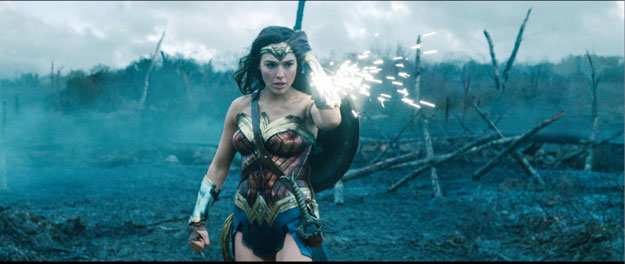
We cut back to this wide from the side shot to be with her as she realizes what she is capable of. Gal’s performance tracks the exciting shift from the observation to that fixed look ahead, telling us it’s “go time!” We had squibs on the bracelets and later on the shield for the sparks and augmented them in post. The clouds in the sky and the explosions were all real, but we enhanced those, as well. That the costume is so minimal is great because, despite its lack of armor, she is still willing to take on the world by herself. But poor freezing Gal! If people knew what Actors can go through. We had many versions of the costume. Most of them had to be very sturdy things with a lot of corseting — which is fairly uncomfortable — so we switched it to something with more give and no rigging when we could.
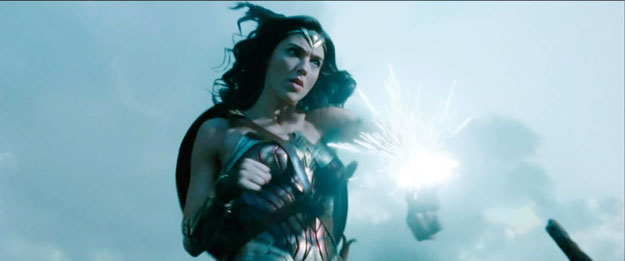
We also had the suits made in every shade of bright and dark color saturation to punctuate whatever I was trying to say at that moment. For the glory moment reveal, after she first steps onto the battlefield, we used a fairly bright Wonder Woman suit, but then we shifted down to a less dazzling suit so we could focus on the action and drama. Lindy Hemming, our Costume Designer, is a genius artist. This is another shot we did on stage for all the same reasons as before. It really punctuates what matters in this scene — which is Diana’s discovery — though throughout the mounting battle we check in with the soldiers on both sides to clock their reaction and retribution. Watching her build confidence and momentum is what really matters and why I chose to go low and isolate and stay with her, as her power escalated.
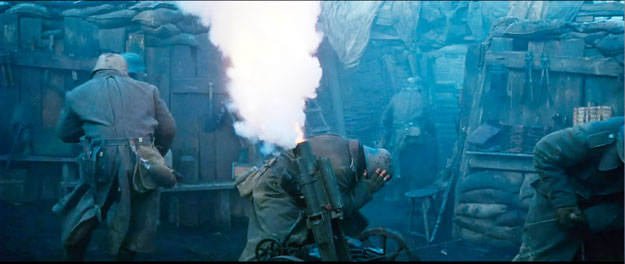
As she closes in, the Germans panic and escalate to cannon fire — their reactions tell the most exciting part of the story. You always want your hero to triumph against impossible odds, which is absolutely crossing No Man’s Land alone. During WWI, soldiers witnessed the endless slaughter of anyone who tried. The stalemates continued for months. Imagine how surreal, frightening, stunning, and confusing seeing Wonder Woman cresting the top and making it across. The soldiers’ reactions to her do tremendous work in telling us exactly how powerful our new hero is. While shooting these scenes, it was profound to sit in these realistic sets and absorb the absolute horror of that war. In these trenches, we could feel the cold and rot, the damp and threadbare wool clothing, the insufficient shoes and inescapable impending doom. The incredibly detailed and realistic work of my beloved Production Designer Aline Bonetto, Set Decorator Anna Lynch-Robinson, and Lindy’s true-to-life costuming yielded an environment imperceptibly different from what the reality would have looked like. That really mattered here.
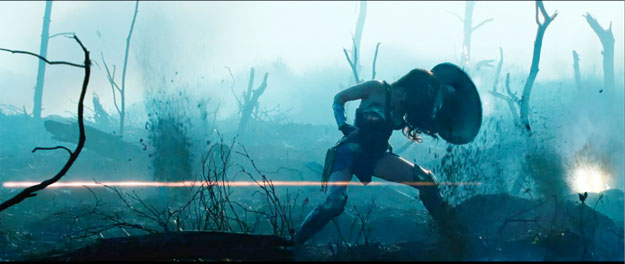
This is the one epic frame that tells the whole story: Wonder Woman, on her own, willing to take on the world. The color timing of the whole film was very important to me. The entire balance was pivotal to the film, and I was lucky to have [Senior Colorist] Stefan Sonnenfeld to punctuate what we didn’t achieve on set. I landed on John Singer Sargent paintings as our solution to the look of the film. His work is period correct, but was so bold, modern, graphic, and poppy. I would sit with my keys and design how to reference his aesthetic in each scene. We stayed with a very controlled color palette — mostly primary — used deep blacks and let things be dark; but then carefully picked which colors to pop so that her costume could emerge beautifully yet be baked into the overall world.
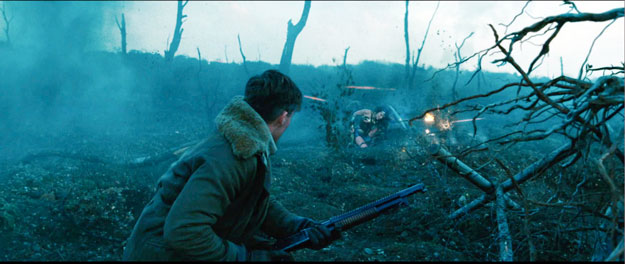
My favorite thing about this moment and shot is how moving the story point is. We have witnessed how powerful and formidable Diana is. But is there anyone of us who does not need others? That is just as intrinsic to the mythology at the core of superhero stories — the moment the world almost takes you down; the moments that no one, no matter how badass they are, can face alone. Here, Diana is down to the ground and it’s clear that she won’t be able to hold this danger off for much longer. It becomes the moment for Steve and the team’s blaze of glory. Ultimately, it is this communion of faith that turns the tides. I tried to make it the feminism 3.0 I would like to see in the future, where you can be a woman — beautiful, kind, loving, badass — and yes, still have love and companionship despite it, and treat the partner well who is willing to do it with you.
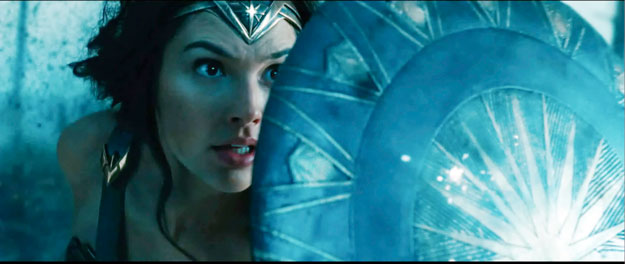
I modeled Steve after Indiana Jones so that I had a man who could be practical and unmacho enough to shrug off that it’s her turn when the big guns are needed, but who adds his own expertise and backing she wouldn’t have otherwise. I really enjoyed this exciting check-in closeup with our hero as she clocks the team, who have put themselves in danger to have her back and successfully lessen the fire she was taking. This opened her path towards a final coup that sends her launching out again toward the German line. It’s all about reading each of those moments in her eyes. This was also shot on stage.
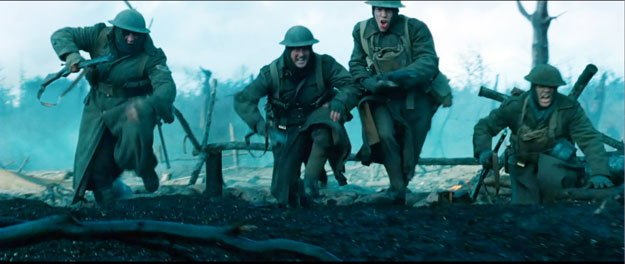
From the trenches behind her, Belgian soldiers shout a chorus of, “She’s done it! Go!” And they charge after her in support. Hearing their joy, resulting from someone finally turning the tide after years of failure, is an epic superhero moment and exactly what they were originally made for. Born as a genre out of WWII, superheroes were wish-fulfillment delivered in the face of a feeling of powerlessness against evil. They offered a delightful fantasy that every little kid and adult wished they could be, or at least witness, in moments of true darkness. The first “She’s done it!” is one of my favorite lines in the movie. And speaking of camaraderie and accidental feminism: the joy here is that if someone was finally able to turn the tide on this battlefield, it does and would override gender completely. If someone saves your life and the day, does anybody really care about the gender of who it was?
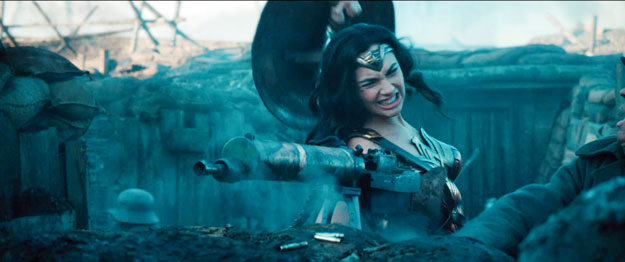
This gratifying moment is the button that punctuates final victory, while defining who Wonder Woman is and will be going forward. When she makes it to the German trench, she doesn’t start attacking people and getting into hand-to-hand combat. Besting or hurting others is not what she is here for. In this case, she simply shuts down the artillery and disables their abilities to do more harm, as if to say, “We won’t be doing this to each other anymore. Sorry.” I love that as simplistically as one might want to see Wonder Woman’s character trait of hating guns, in this moment, is she not making a good point? Without the machine gun that she smashes in this shot — a recently invented tool that created the stalemate and slaughter of WWI and No Man’s Land — the damage and death across the field could not happen. Period. It’s a hard observation and wisdom to argue.
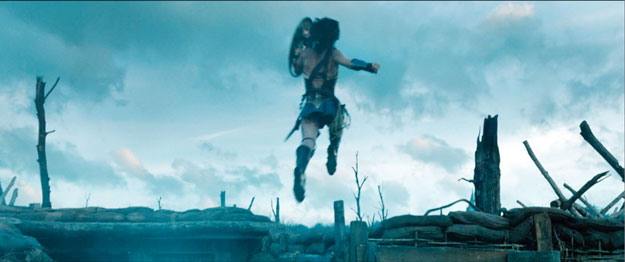
Through this scene, our hero is born as Wonder Woman. She decided, transformed, put her powers to use, and was ultimately victorious. She believes in what she can do and launches off into the future with purpose. I love this shot emotionally, but I struggled with the VFX jump. Gravity is a persnickety thing to render realistically. It’s why many directors have their superhero characters slam down with unnatural speed and impact, thus avoiding the middle ground. But that would have been out of tone with our film. So, we struggled with making it look natural and it’s why I did almost all the stunts of WW84 on wires. Luckily, our great VFX team was able to get pretty damn close. To me, this shot symbolizes all the great artists who came together to make this scene all it could be, jumping away from something very challenging yet epically important. We felt victorious — and in art, what other barometer do we have?
SCREENPULLS: Warner Bros. Entertainment.
Jenkins portrait by Lori Dorman and Co. Photography